How to Choose an Epoxy Flake Color Blend for a Worcester County Garage

Joe Cafarella • October 5, 2026

That honesty matters. Some projects do not need a full professional system.

Professional installation costs more because the scope includes equipment, materials, prep, repairs, and application control. The value shows up when the floor faces hot tires, grit, and daily parking.

  • DIY kit: lower initial cost, shorter life, limited prep tools.
  • Professional coating: higher initial cost, stronger prep, better system control.
  • DIY downtime: depends on homeowner pace and cure conditions.
  • Professional downtime: planned around coating type and return-to-use needs.
  • DIY risk: peeling can mean buying materials twice.
  • Professional risk: lower when the slab is evaluated before work starts.

Our guide on how to do concrete coating explains why coating steps matter before the finish layer goes down.

It's easy to see a "15 to 25 year" number online and assume it applies to any garage floor. It doesn't automatically transfer. Slab moisture, existing deterioration, traffic patterns, and years of winter contamination all change the outcome. The same coating can perform differently in two different garages. It's worth asking how an installer plans to assess your slab, not just which product they're using. If your existing floor has visible wear or you're unsure whether it needs repair first, this decision guide on garage floor repair, resurfacing, or recoating can help you determine the right next step.
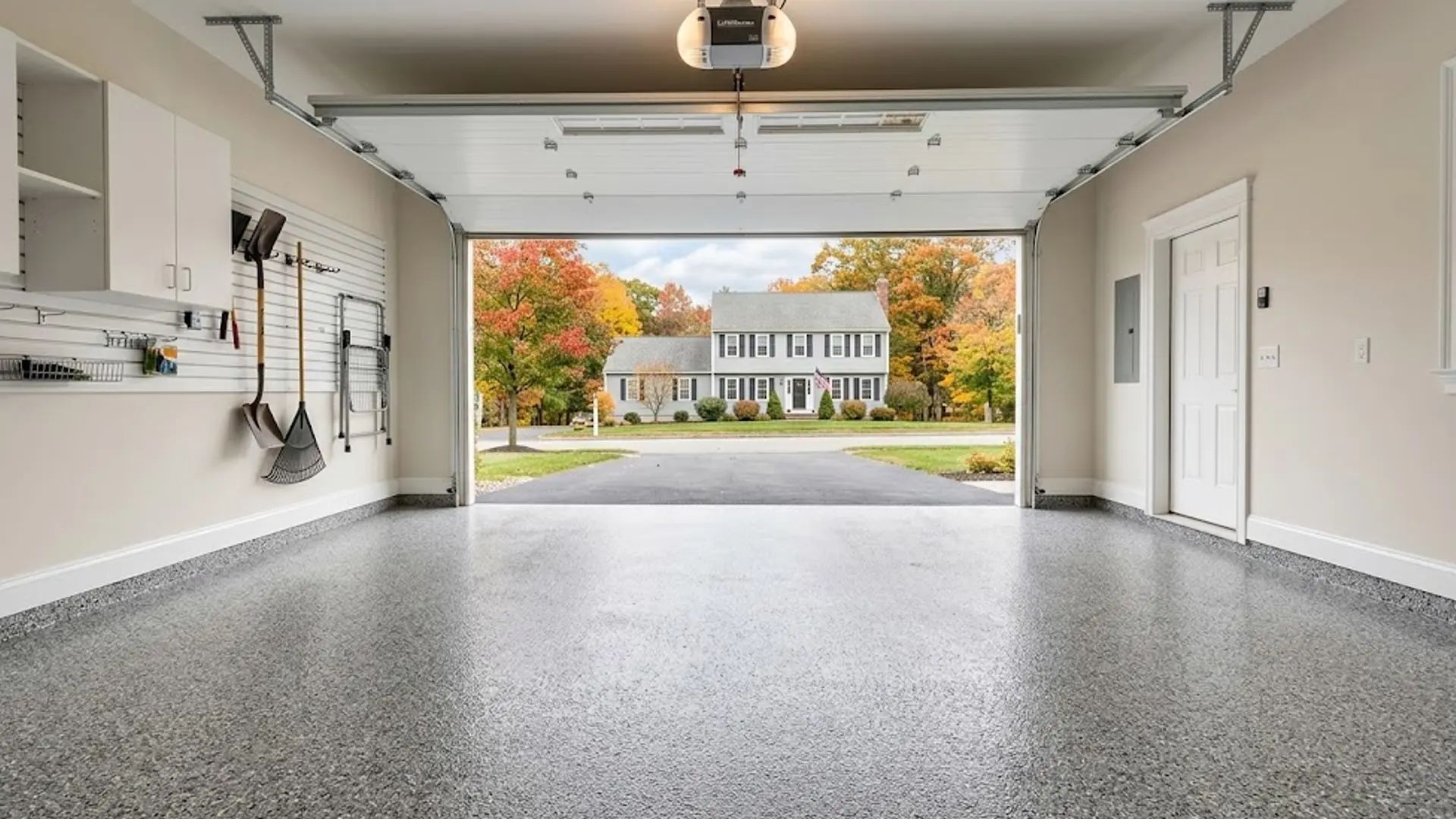
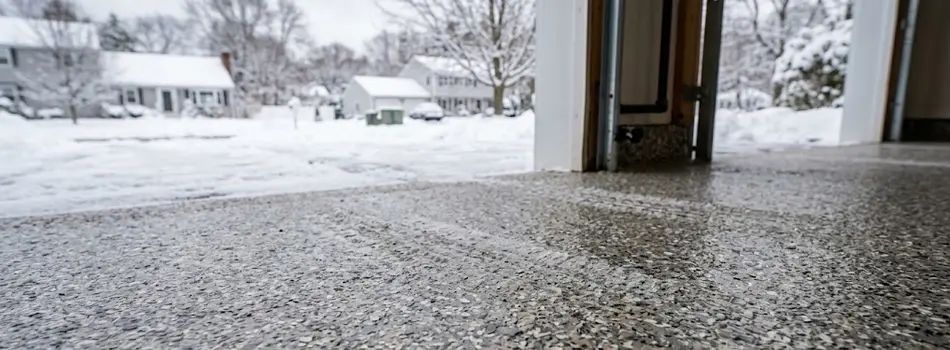
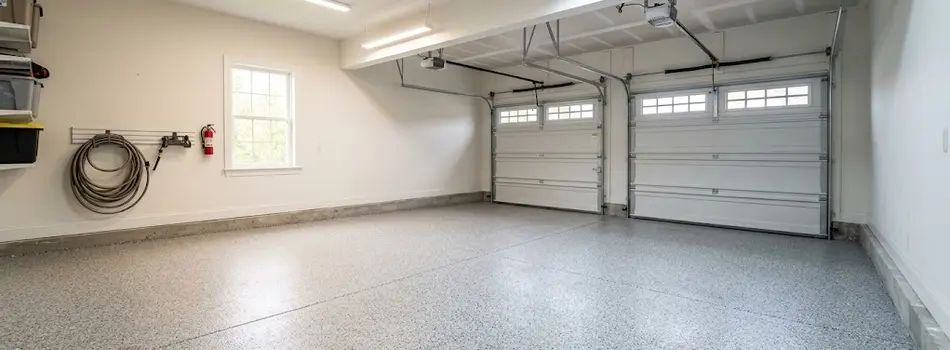
For most Worcester County garages, the most practical choice is a multi-tone, mid-range flake blend. Think grays, tans, or taupes mixed with a few lighter and darker accent chips. That kind of blend hides the salt residue, dried slush, and tire marks a New England winter tracks in far better than a very dark or very light floor. From there, you can fine-tune based on your garage's lighting and what's already in the room. At LC Visions Epoxy & Coating, we install epoxy flake flooring across Worcester County, and choosing a blend with this in mind makes the biggest difference in how the floor looks day to day.

Start With What Your Floor Has to Hide in Winter

A garage floor in Worcester County spends several months taking in snow, slush, and road salt every time a car pulls in. Once that moisture dries, it leaves white salt streaks, gray film, and grit behind. How visible that is depends mostly on the color of your floor.


Dark blends (charcoal, black, deep blue) look sharp when clean, but they show white salt residue, dust, and dried water spots almost immediately.


Very light blends (white, pale gray, cream) brighten the space, but they show tire marks, oil drips, and tracked-in dirt more readily.


Multi-tone mid-range blends mix light, medium, and dark chips, so everyday grime blends into the pattern instead of standing out against it. For a working garage that sees winter traffic, this is usually the easiest option to live with.


No blend is maintenance-free. A mid-range blend just buys you more time between wash days before the floor starts to look grimy. For keeping any flake floor in good shape through the winter, see our guide on how to clean an epoxy garage floor.

Adjust Based on Your Garage's Lighting

A blend that looks warm and neutral in a sample can change once it's under your garage lights. Flake colors pick up the tone of the light around them, and most garages are lit very differently from a showroom.


Dim garages, or garages lit by a single overhead bulb, do better with a lighter base and brighter accent chips. Darker blends can make a poorly lit garage feel smaller and harder to work in.


Bright garages with windows, skylights, or plenty of LED shop lighting can handle darker or higher-contrast blends without feeling heavy.


Cool-toned LED lighting tends to push grays toward blue. Warm bulbs can make tans and beiges look more yellow. If you're torn between two blends, the lighting often decides it.

Match What's Already in the Room

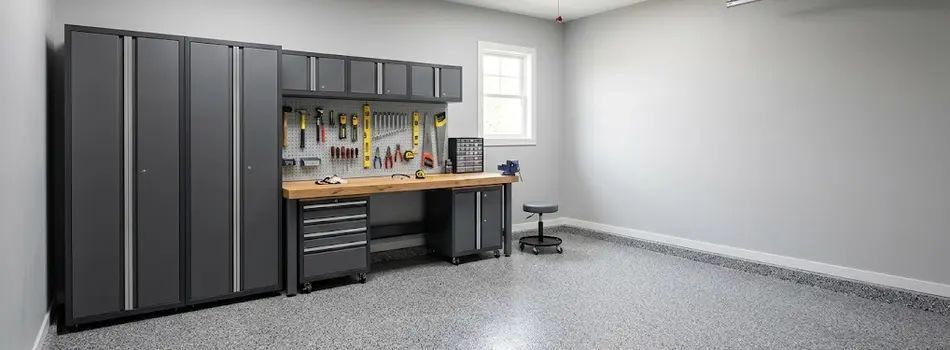
The floor sits next to everything else in the garage, so it should work with it. Look at your cabinets, workbench, wall color, and storage systems. If they're gray or black, a gray-based blend ties the room together. If you have wood tones or warm-colored walls, a tan or beige-based blend usually looks more natural.


Then decide how much pattern you want. Tighter blends with a few closely related tones read calm and uniform. Blends with sharper contrast chips look busier and more speckled, and they're better at hiding dirt. If the garage doubles as a gym, workshop, or hangout space, a bolder blend can give it some personality. If it's mainly for parking and storage, a quieter, grime-hiding blend is the safer pick.

Test Samples in Your Own Garage

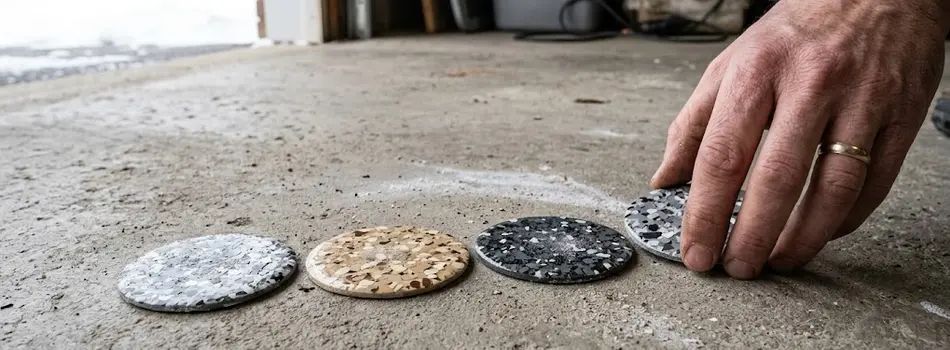
The most reliable way to choose is to look at samples where the floor will go. Set them on the garage floor, check them under your usual lighting at different times of day, and if you can, scuff a little dirt or salt onto them. A sample that still looks good slightly dirty under your own lights is the one you'll be happy with in February.

Sort Out Prep Before Locking In a Color

Color is the last decision. A flake floor is a layered system: a properly prepped slab, a base coat, the flake broadcast, and a protective topcoat that seals everything in. Any moisture or damage in the slab needs to be addressed before the look matters.


A flake pattern can visually soften minor discoloration in an older slab, but it won't fix cracking, spalling, or moisture coming up through the concrete. If you want to know what that process involves, our pro's checklist for preparing a garage floor for epoxy walks through it.

Frequently Asked Questions

What epoxy flake color hides dirt best in a garage?

Multi-tone blends in the gray, tan, or taupe range, mixed with a few lighter and darker chips, hide salt residue, dust, and tire marks better than solid dark or very light floors.

What flake blend works best in a dark garage?

Choose a blend with a lighter base and brighter accent chips, and view samples under your actual garage lighting rather than a showroom's.

Do flake floors work with a polyaspartic topcoat?

es. Flake systems can be finished with a polyaspartic topcoat, which adds UV protection. That's especially useful in garages that get direct sunlight through an open door or windows.

Find the Right Blend for Your Garage

LC Visions Epoxy & Coating helps homeowners in Milford and across Worcester County choose a flake blend that fits their space, lighting, and winter routine, then installs it on a properly prepped slab. Call (724) 413-8946 to talk through your garage and see blend options in person.