
Garage Floor Repair, Resurfacing, or Recoating? A Decision Guide
Choosing between repairing, resurfacing, recoating, or replacing a garage floor comes down to four things: the slab's structure, how deep the surface damage goes, whether moisture is moving through the concrete, and how the floor gets used. Get those right and you avoid paying for more work than the floor needs. LC Visions Epoxy & Coating evaluates concrete floor coatings by checking cracks, spalling, and moisture before recommending the least invasive option that will actually hold.
The tricky part is that damaged concrete often looks worse than it is. A scarred Worcester County slab may need nothing more than grinding and patching, while a cleaner-looking floor can hide moisture that quietly ruins coating adhesion. Below, we break down how to read the damage, compare your options honestly, and match the fix to the floor.
When Repair or Recoating Is Enough
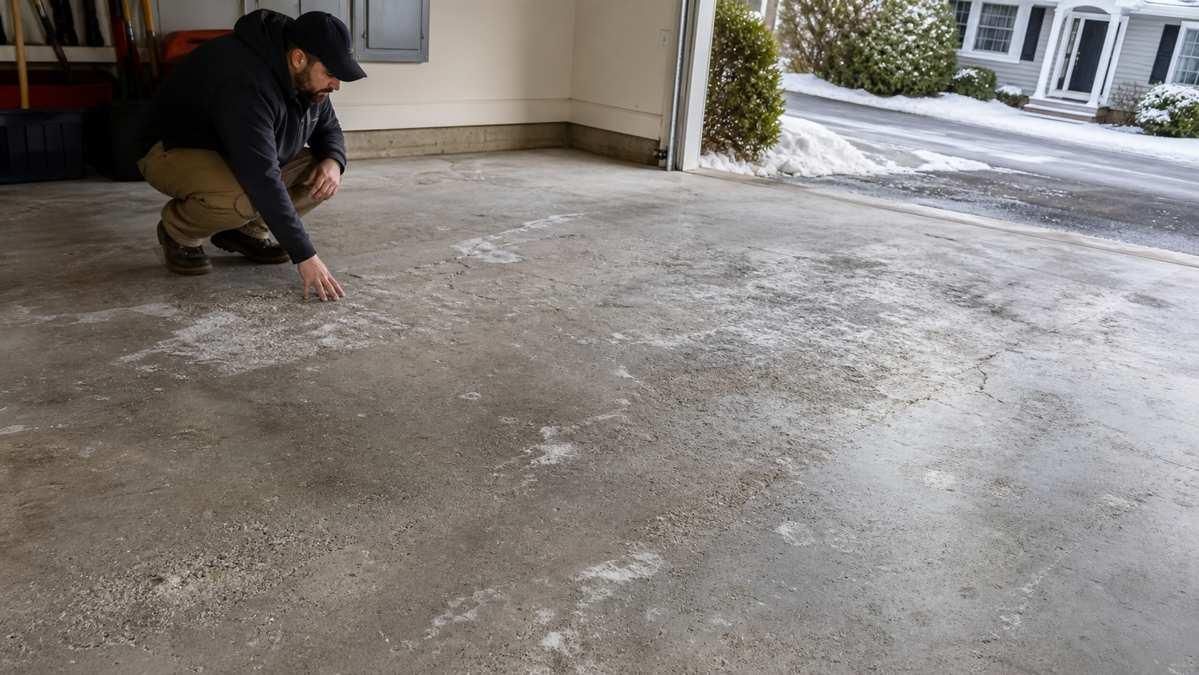
Repair or recoating works when the concrete is stable and the problem stays near the surface. In New England garages, that usually means salt staining, light pitting, worn topcoat, small cracks, or an older coating that has lost gloss without widespread peeling.
A professional inspection looks for patterns, not just ugly spots. One isolated crack can be routed, filled, and coated. Peeling across several tire paths points to deeper prep failure. White powdery residue, called efflorescence, means moisture is carrying salts through the slab.
Recoating may make sense when:
- The current coating is bonded tightly to the slab.
- Cracks are narrow and not actively moving.
- Spalling is shallow enough to patch level.
- Moisture testing does not show vapor pressure.
- The homeowner wants a refreshed finish, not structural correction.
LC Visions offers floor repair, including crack filling, leveling, patching, and moisture vapor barrier installation when needed. That prep matters because a coating is only as strong as the surface underneath it.
If price is the first question, review concrete coating costs before comparing bids. A lower resurfacing quote may skip grinding, crack repair, or moisture control, which are the steps that protect the finished floor.
When Resurfacing Beats Full Replacement
Resurfacing fits floors with visible wear but no major slab movement. The goal is to restore the working surface so a coating system can bond correctly and handle daily garage use.
Massachusetts freeze-thaw cycles make this call more specific. Water seeps into pores and hairline cracks, freezes, expands, and breaks the weak surface paste loose, and road salt drags the cycle out by holding moisture against the concrete longer. Surface damage like this is common on older garage slabs across the region, including small, established towns like Mendon, and it rarely means the slab underneath has actually failed.
Signs resurfacing is the better path
Resurfacing is usually worth considering when the slab stays level but the surface has:
- Pitting from salt and winter slush.
- Shallow spalling near the garage door.
- Old coating residue after grinding.
- Cosmetic cracks that do not offset.
- Dusting concrete that sheds fine powder.
Full replacement is different. LC Visions does not provide concrete slab replacement or major structural concrete work. If a slab has large heaving, deep settlement, drainage failure, or broken sections that move under load, a concrete replacement contractor may be needed before coating.
Resurfacing keeps the project focused. You preserve a usable slab, correct surface defects, and add a system built for salt, tires, and daily traffic.
How to Choose the Right Path
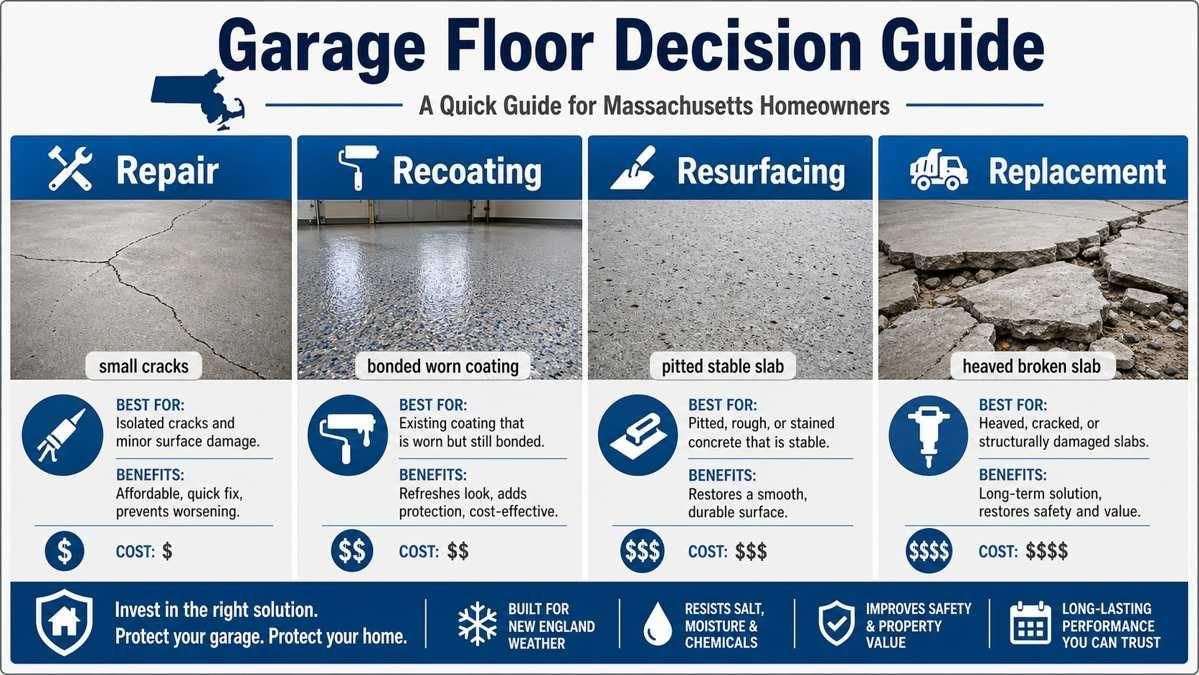
The right choice starts with what failed. Surface wear calls for repair. Bond failure calls for removal and prep. Slab movement calls for structural evaluation before any coating conversation.
Use this decision frame before approving work:
- Repair: Best for small cracks, chips, and isolated damage.
- Recoating: Best for bonded coatings with worn gloss or light abrasion.
- Resurfacing: Best for pitted or rough concrete that is still stable.
- Replacement: Best for heaved, sunken, or broken slabs outside LC Visions' coating scope.
A failed coating often gives the clearest clue of all. Hot-tire pickup, bubbling, and sheet peeling almost always trace back to prep, moisture, or a low-grade product rather than the slab itself, and seeing how those common epoxy floor problems develop helps you tell cosmetic wear from a deeper installation failure before you decide how much work to pay for.
Strong garage floor projects follow the same order every time: inspect, grind, repair, test moisture, apply the correct coating, then complete a walkthrough. Skipping the first steps makes any option less reliable.
Frequently Asked Questions
Can a pitted Massachusetts garage floor be resurfaced before coating?
A pitted Massachusetts garage floor can usually be resurfaced when the damage stays shallow and the slab remains stable. Salt, snowmelt, and freeze-thaw cycles often roughen the surface without ruining the whole slab. LC Visions checks depth, moisture, and movement before recommending coating.
When is garage floor replacement better than resurfacing?
Garage floor replacement is better when the slab has heaving, major settlement, wide moving cracks, or broken sections. Those issues sit outside a coating contractor's repair scope. Resurfacing improves the surface, but it cannot correct a slab that is shifting under the garage.
Does recoating fix peeling from a bad DIY epoxy job?
Recoating can fix peeling only after the failed material is removed and the slab is prepared correctly. Covering loose DIY epoxy traps the original problem underneath. Grinding, crack repair, and moisture checks are usually needed before a new coating can bond.
Pay for the Work Your Floor Actually Needs
A garage floor finish only performs when the slab is ready to hold it. If the concrete is stable, repair or resurfacing saves money and keeps the slab you already have. If the slab is moving, structural work has to come first, and an honest contractor will tell you that rather than coating over the problem. That order—diagnosis before finish—is the whole point.
To figure out the right next step for your floor, contact LC Visions Epoxy & Coating at (724) 413-8946 .