
Common Epoxy Floor Problems (And How the Pros Fix Them)
The four most common epoxy floor problems are peeling, bubbling, yellowing, and hot-tire pickup. Each one looks like a different failure on the surface, but nearly every case traces back to one of two causes: surface preparation that was skipped or shortened, or material quality that didn't match what the garage actually demands. The epoxy itself is rarely the problem. The decisions made before the first coat went down are.
LC Visions Epoxy & Coating has seen every one of these failures in concrete floor coating jobs across Worcester County, and the pattern repeats every time. We break down peeling and delamination, bubbling and blistering, yellowing and hot-tire pickup—what causes each one, what the professional fix looks like, and how to avoid them entirely on the next floor.
Peeling and Delamination
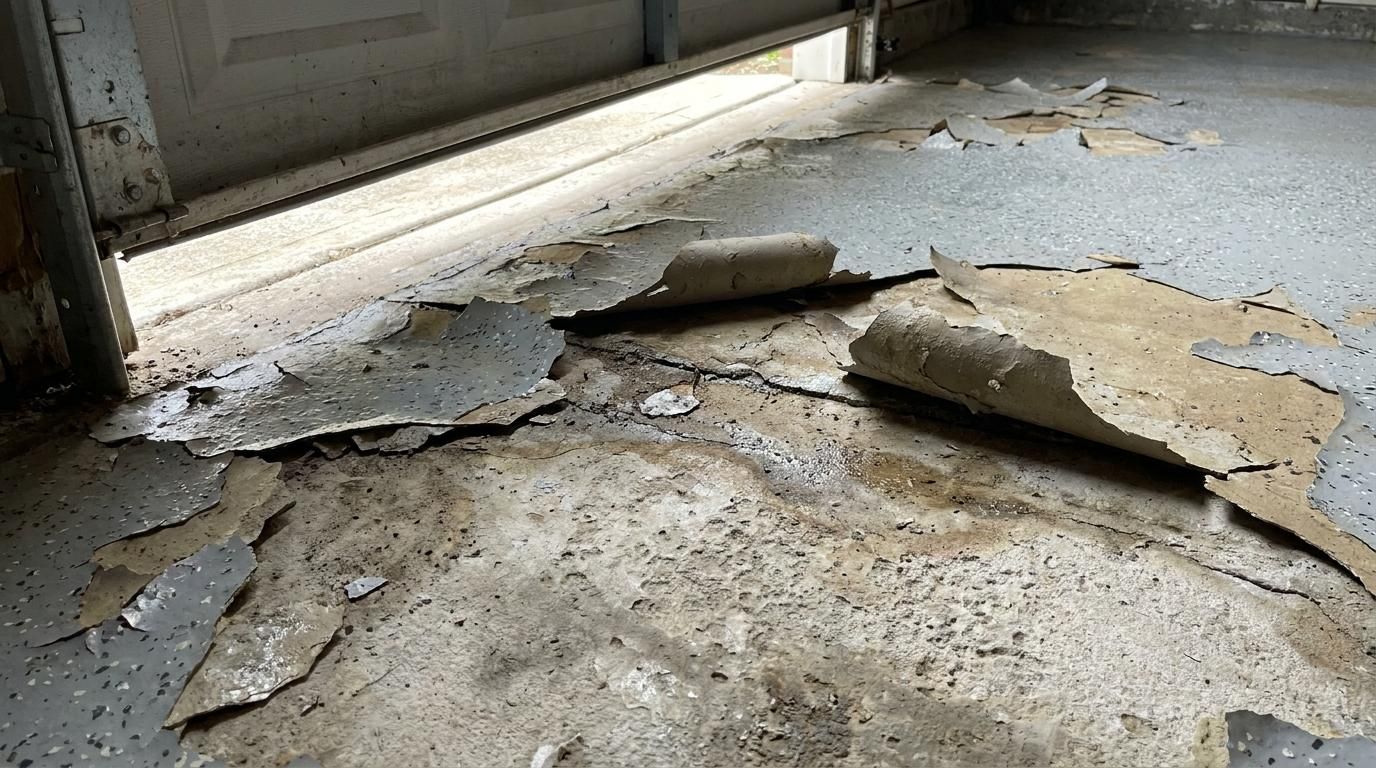
Peeling is the most visible epoxy floor failure and the one Massachusetts homeowners report most often after a harsh winter. The coating lifts away from the concrete in sheets or chunks, usually starting at edges near the garage door, expansion joints, or high-traffic parking spots.
What Causes It
The surface wasn't mechanically ground before coating. Acid etching, the typical DIY alternative, doesn't create enough profile for the epoxy to grip long-term. Oil, grease, dust, or old sealers left on the concrete also block adhesion. In Massachusetts, years of road salt contamination embedded deep in the slab create a bonding obstacle that surface-level DIY prep simply can't address.
How Pros Fix It
Strip the failed coating completely. Diamond grind to proper Concrete Surface Profile, test and address any moisture issues, and recoat with professional-grade material. Spot patches over peeling areas rarely hold because the adhesion failure extends well beyond the visible damage.
Bubbling and Blistering
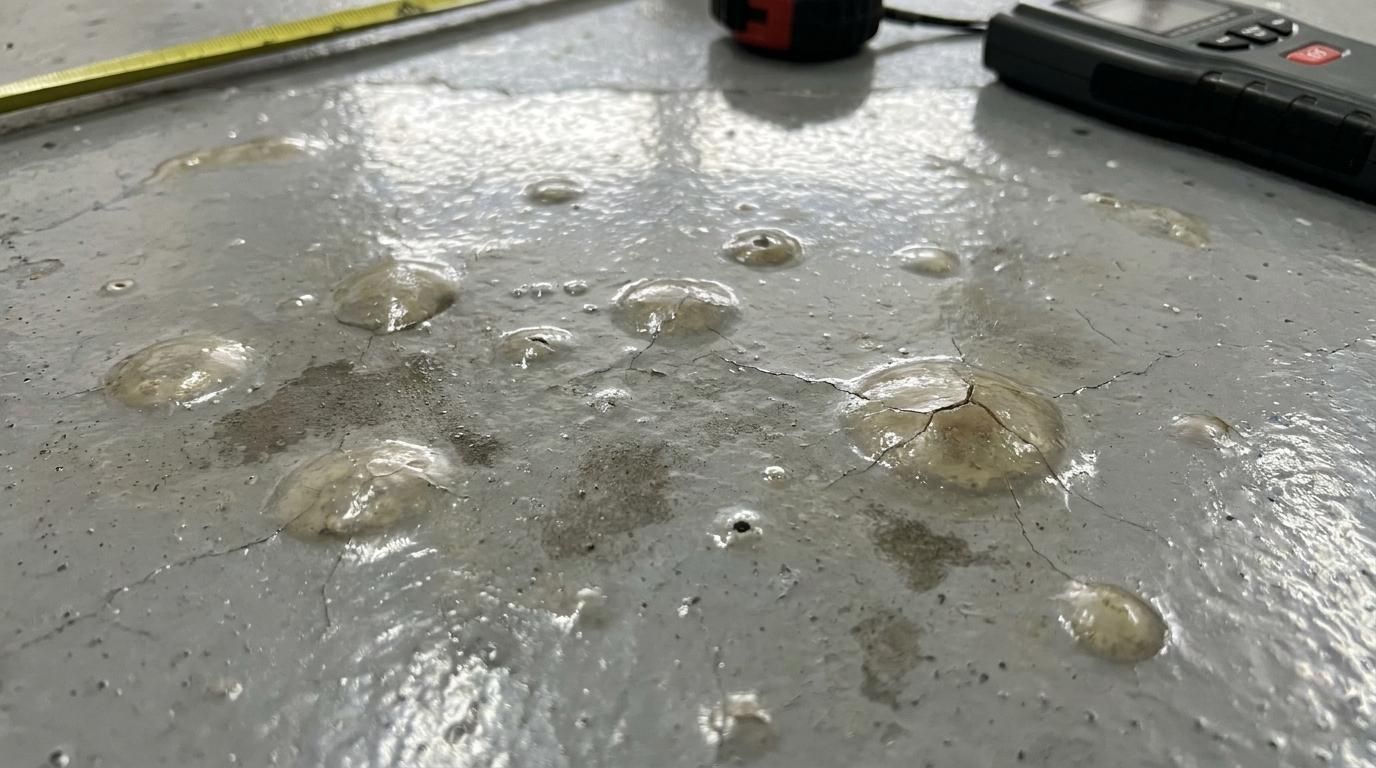
Bubbles trapped under the epoxy surface are almost always a moisture problem. Worcester County's older housing stock and high seasonal water tables make this especially common in garages and basements.
Moisture vapor rises through concrete slabs that lack a modern vapor barrier. When that moisture hits the underside of a freshly applied coating, it creates pressure pockets that push the surface up into blisters. The problem is worst in structures built before the 1980s, when vapor barriers weren't standard in Massachusetts construction. Spring and early summer are the highest-risk application windows because snowmelt raises water tables and increases vapor transmission through garage slabs.
Professional installers test for moisture vapor transmission before coating and install barriers when readings exceed safe thresholds. This single step prevents most bubbling failures. Skipping it is the most common shortcut in the coating industry.
Yellowing and Hot-Tire Pickup
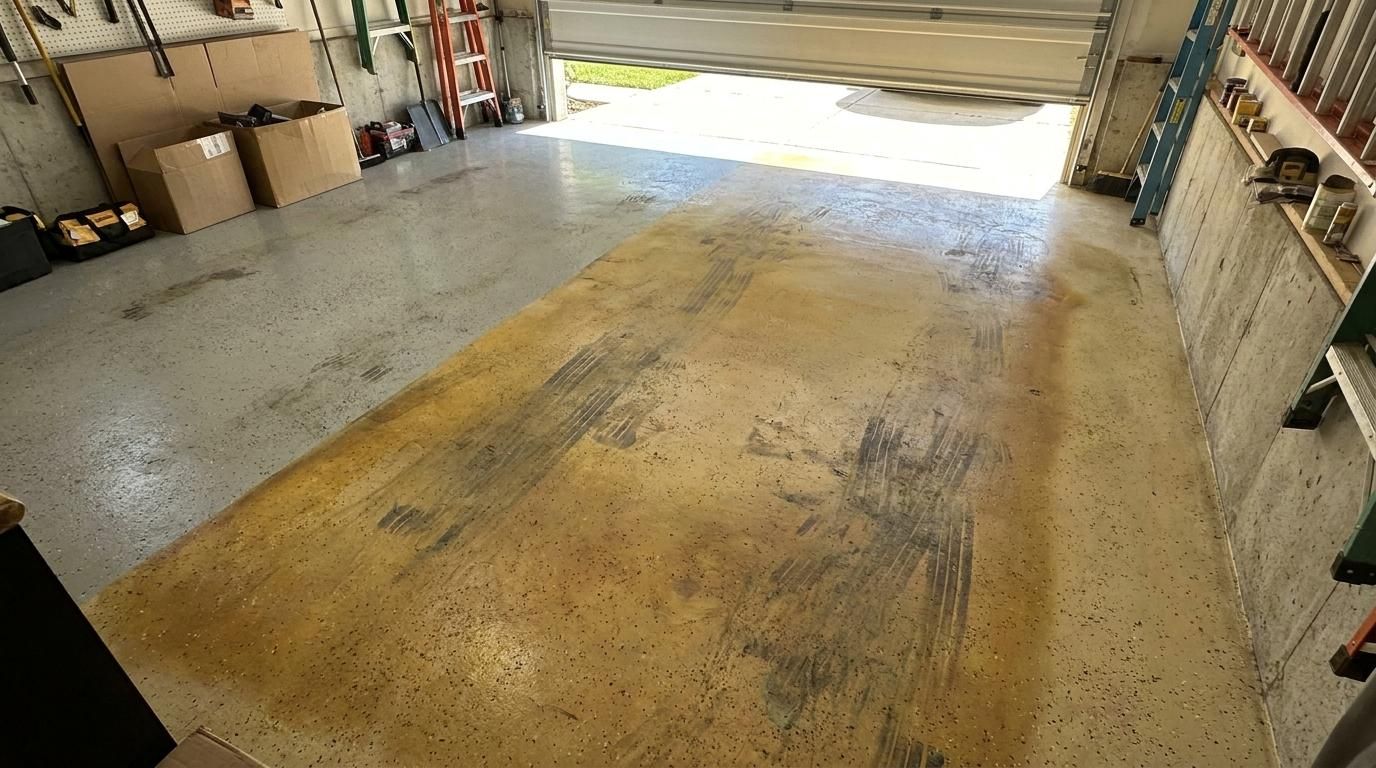
Two problems that look different but affect nearly every unprotected epoxy garage floor in Massachusetts.
Yellowing
Standard epoxy isn't UV-stable. Garages with south-facing windows or doors that stay open regularly expose the coating to sunlight that degrades the epoxy's chemical structure over time. UV-stable topcoats (polyaspartic or polyurea) applied over the epoxy base layer block this degradation. LC Visions applies polyaspartic topcoats as standard to prevent yellowing in Foxborough, Worcester, and the surrounding communities.
Hot-Tire Pickup
When hot tires sit on thin or improperly cured epoxy, the heat softens the coating and the tire bonds to the surface. Lifting the tire peels the coating with it. This happens most often with single-coat DIY kits that lack the thickness and cure hardness of professional multi-layer systems. A properly built epoxy flake or polyurea system with a commercial-grade topcoat is designed to resist hot-tire transfer.
Frequently Asked Questions
Can peeling epoxy be repaired without a full recoat?
Small isolated patches sometimes hold temporarily, but peeling usually indicates a system-wide adhesion failure across the floor. The surrounding concrete has likely lost bond strength too. Professionals strip the affected area back to solid concrete, regrind to proper profile, and apply a new full system. Partial repairs over coating that has begun to fail tend to peel again within months.
Why did my epoxy floor bubble after installation?
Moisture vapor rising through the concrete slab is the most common cause of epoxy floor bubbling. If the installer didn't test for moisture before application or skipped vapor barrier installation, blistering often appears within the first few weeks. High humidity during application and incorrect mix ratios are less common but produce similar results.
How do I prevent my epoxy garage floor from yellowing?
Ask your installer about UV-stable topcoats. Polyaspartic and polyurea topcoats block ultraviolet degradation and maintain the coating's original color and gloss for years. LC Visions Epoxy & Coating applies UV-stable topcoats on every residential installation to prevent yellowing in Massachusetts garages.
Every Failure on This List Starts With Poor Prep
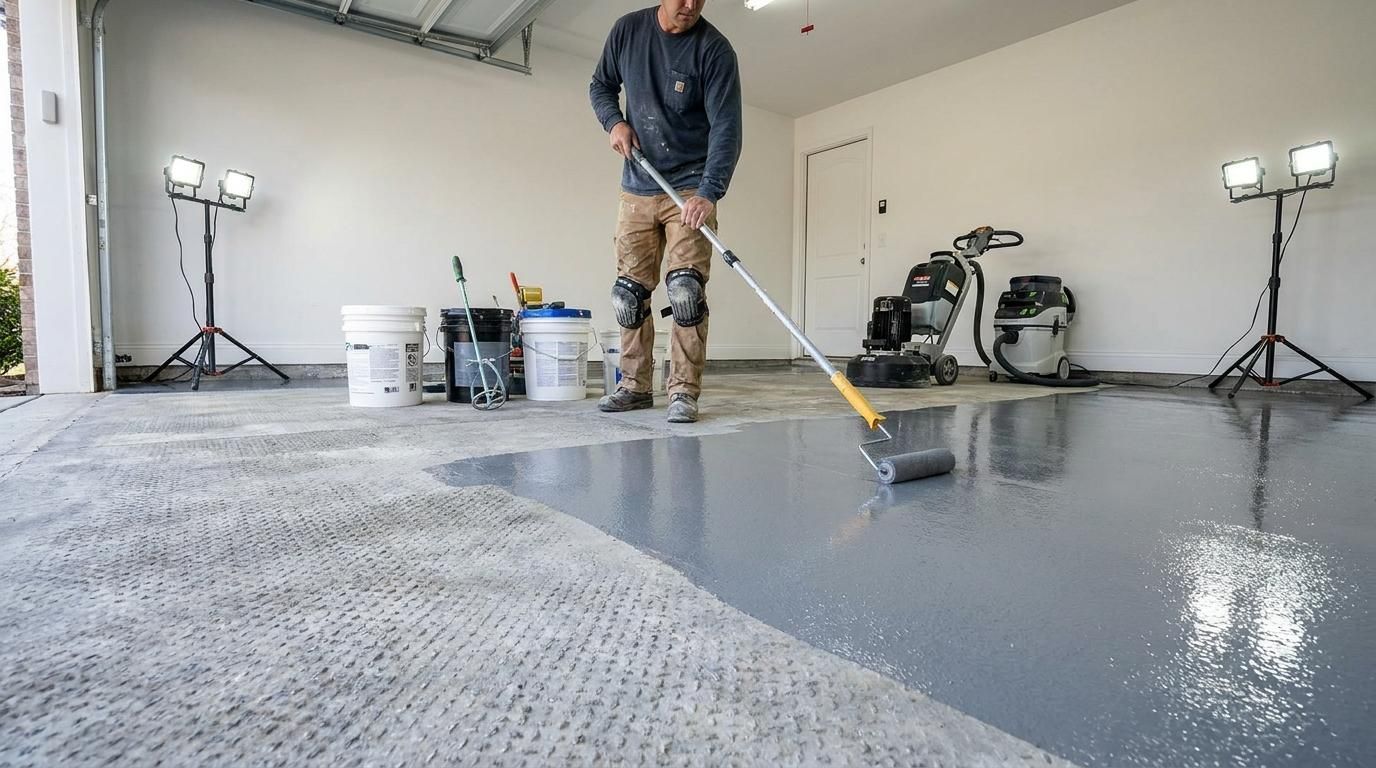
A lifted edge near the garage door. A cluster of bubbles after the first humid spring. A faint yellow tint where sunlight hits the slab. Each problem on this list looks different, but the foundation of every fix is the same: diamond-ground concrete, tested for moisture, coated with professional-grade material before the first layer goes down. A floor coated correctly from the start won't develop peeling, bubbling, yellowing, or hot-tire pickup at all. The repairs only get expensive when the prep gets skipped.
Contact LC Visions Epoxy & Coating at (724) 413-8946 if your floor is showing early signs of wear or you're ready for a system built for Massachusetts' conditions.