
Polyurea Floor Coating Cost in Massachusetts: Is the Upgrade Worth It?
Polyurea floor coating costs $5 to $10 per square foot installed in Massachusetts, putting a standard two-car garage between $2,000 and $5,000, depending on concrete condition and prep work. The price runs $1 to $3 more per square foot than epoxy flake, a roughly $450 to $1,350 premium on a 450-square-foot garage. That gap buys faster cure times, UV stability, and flexibility through Worcester County's 35 to 40 freeze-thaw cycles per season. Whether the upgrade earns that money back depends on where the floor sits and what it faces.
LC Visions Epoxy & Coating installs polyurea systems across Worcester County for garages, patios, and outdoor surfaces where UV stability and fast curing matter. Keep reading to learn what drives polyurea pricing, how it compares to epoxy in real-world costs, and the specific situations where the upgrade pays off over the life of the floor.
What Drives Polyurea Floor Coating Prices
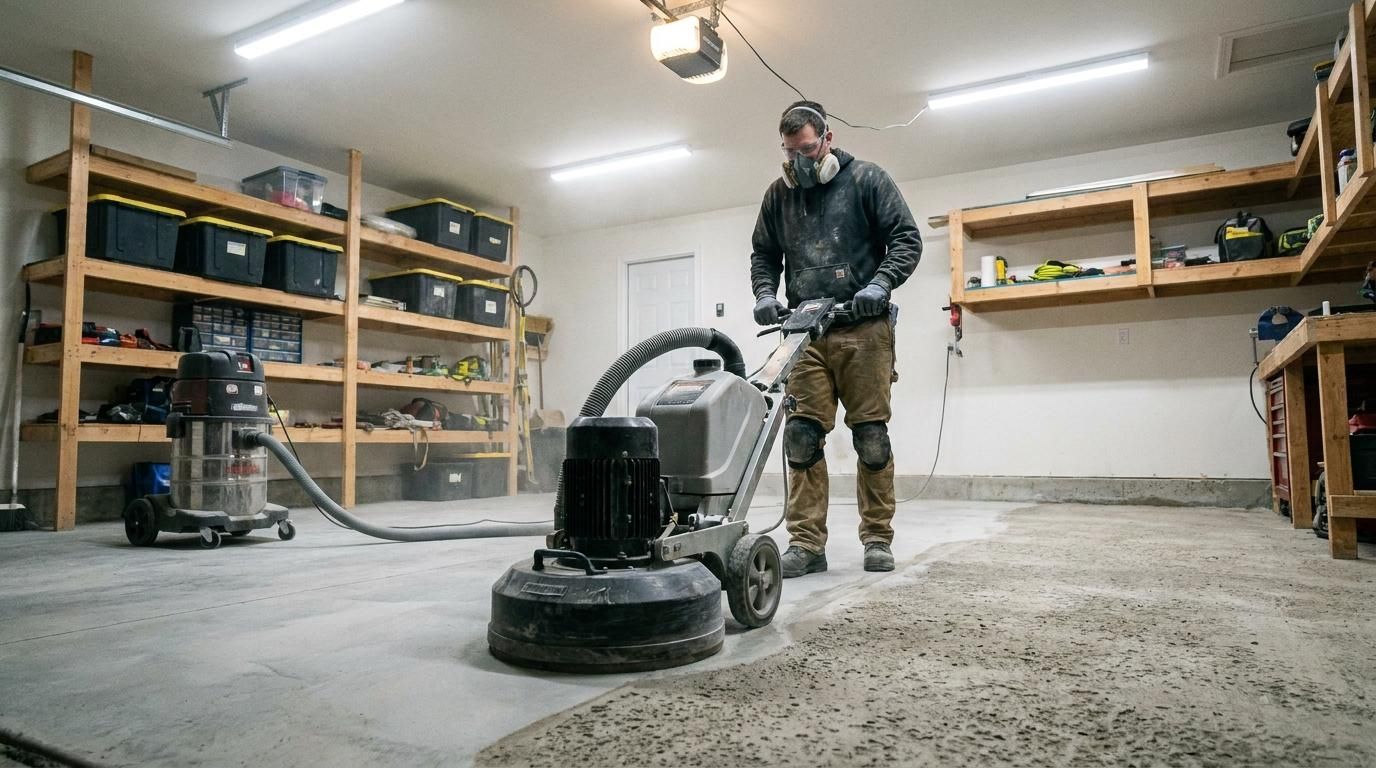
The price on a polyurea job reflects more than material alone.
Surface Preparation
Diamond grinding, crack repair, and moisture testing make up roughly 30 to 40 percent of the total project cost. Older slabs across Milford, Hopkinton, and Marlborough often need heavier grinding to reach the surface profile a polyurea system requires for a lasting bond.
Material Grade
Professional-grade polyurea resin costs more per gallon than standard epoxy because it cures faster, flexes with the slab, and resists UV degradation without yellowing. LC Visions uses concrete floor coatings rated for commercial and industrial use: never water-based or consumer-grade products.
Garage Size and Condition
A 250-square-foot one-car garage with clean concrete typically runs $1,500 to $2,500. A 500-square-foot two-car garage with cracks and moisture issues can reach $5,000 or more once prep and repair are factored in.
Polyurea vs. Epoxy: Where the Cost Difference Shows Up
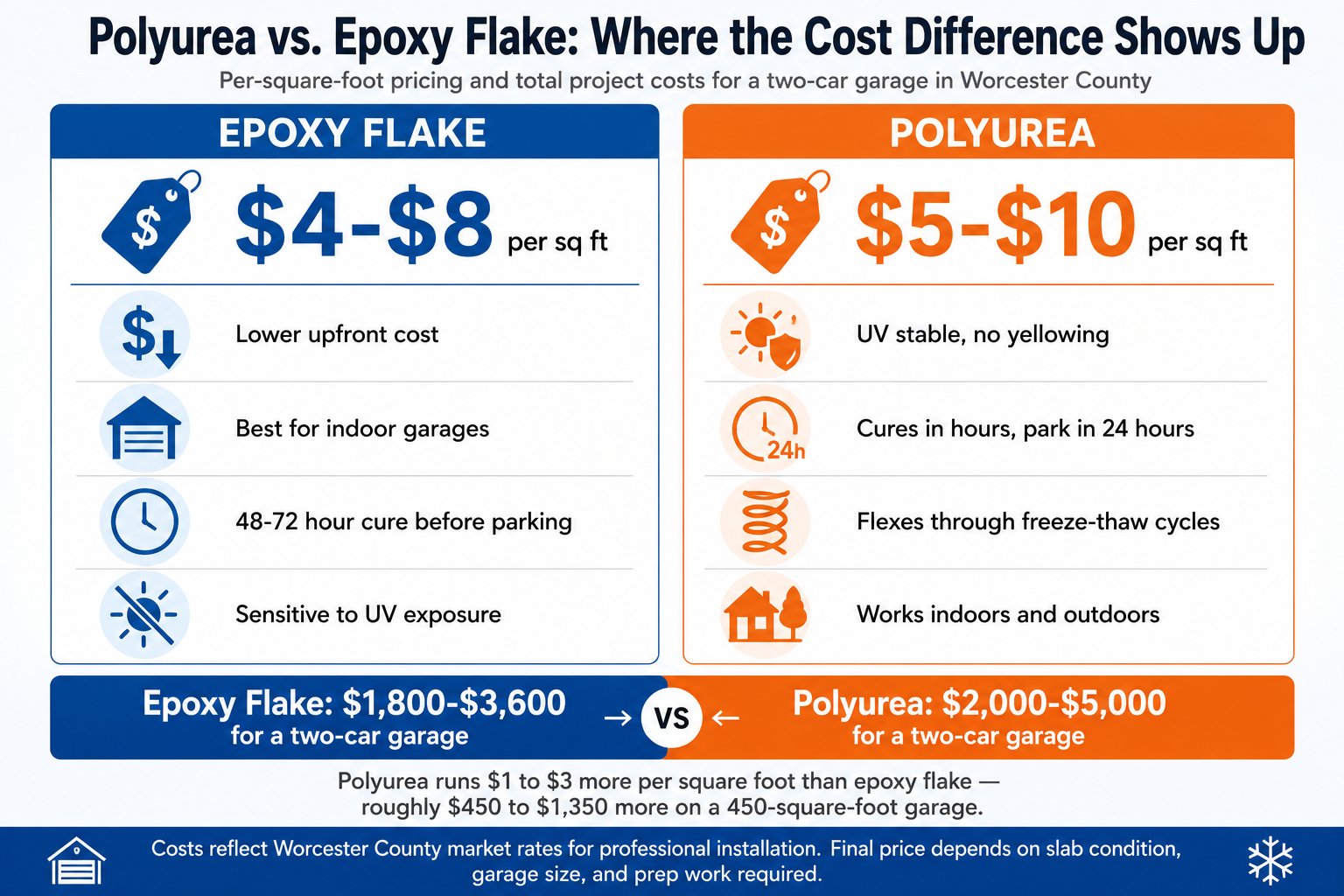
Epoxy flake systems typically run $4 to $8 per square foot installed, roughly $1 to $3 less per square foot than polyurea. On a 450-square-foot garage, that gap adds up to roughly $450 to $1,350.
Where Epoxy Saves Money
Epoxy resin costs less per gallon, and its longer cure window requires fewer specialized techniques during application. For indoor garages that never see direct sunlight, an epoxy flake system delivers strong performance at a lower cost. It's one of the systems LC Visions installs most often across Worcester County garage floors.
Where Polyurea Earns It Back
Polyurea cures in hours instead of days, getting your car back in the garage within 24 hours instead of 72. It won't yellow from UV exposure, making it the right fit for patios, entryways, and walkways. It also flexes with concrete movement during Massachusetts' dozens of freeze-thaw cycles rather than cracking under the stress.
When Polyurea Is Worth the Extra Cost
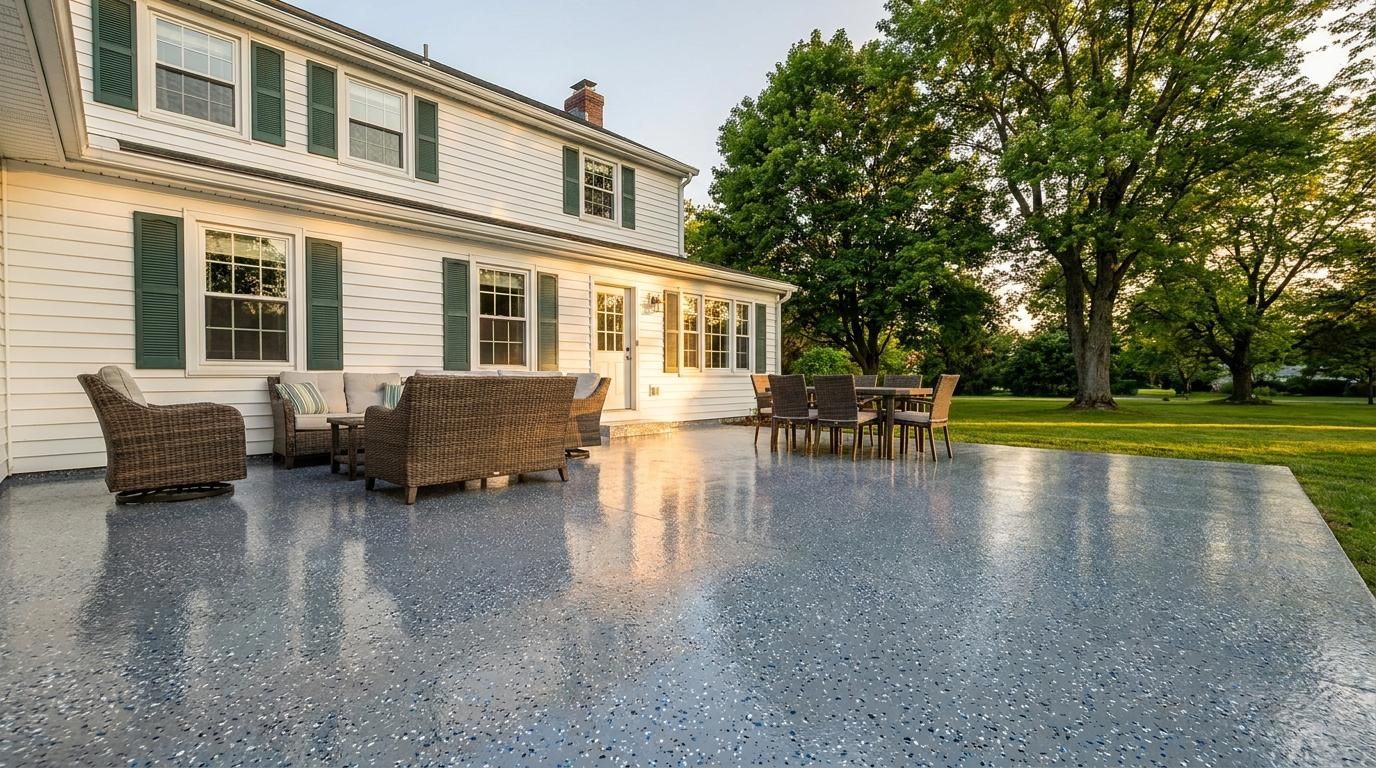
Not every garage needs polyurea. The upgrade makes the most financial sense in specific situations.
- Outdoor surfaces: Patios, steps, and walkways exposed to direct sunlight need UV stability that standard epoxy cannot deliver.
- Fast turnaround: If 72 hours of garage downtime is a problem, polyurea's same-day cure lets you walk on the floor within hours and park the next morning.
- High-traffic zones: Commercial entries and heavily used residential areas benefit from polyurea's flexibility and abrasion resistance.
- Freeze-thaw exposure: Worcester County's seasonal temperature swings stress rigid coatings. Polyurea flexes with the slab instead of cracking.
For a standard indoor garage with no UV exposure, a professional epoxy flake system delivers comparable durability at a lower price. LC Visions walks through both options during every coating cost breakdown so you can compare them side by side.
Frequently Asked Questions
Is polyurea cheaper than epoxy for a garage floor?
No. Polyurea typically costs $1 to $3 more per square foot than epoxy flake when professionally installed. On a two-car garage, that adds roughly $450 to $1,350 to the project total. The premium buys faster cure times, UV stability, and greater flexibility under New England temperature swings.
How long does a polyurea garage floor coating last?
A professionally installed polyurea system with proper surface prep is designed to perform for 15 to 20 years. LC Visions Epoxy & Coating diamond-grinds every slab, fills cracks, and tests for moisture before applying any coating, the prep work that keeps Worcester County floors bonded through decades of freeze-thaw cycling.
Can I apply polyurea over an existing epoxy floor?
It depends on the existing coating's condition. If the epoxy is peeling, bubbling, or poorly bonded, it needs to come off entirely. A solid, well-adhered epoxy base can sometimes accept a polyurea topcoat, but a professional assessment of the current surface is always the safest first step.
Where Polyurea's Premium Pays Off
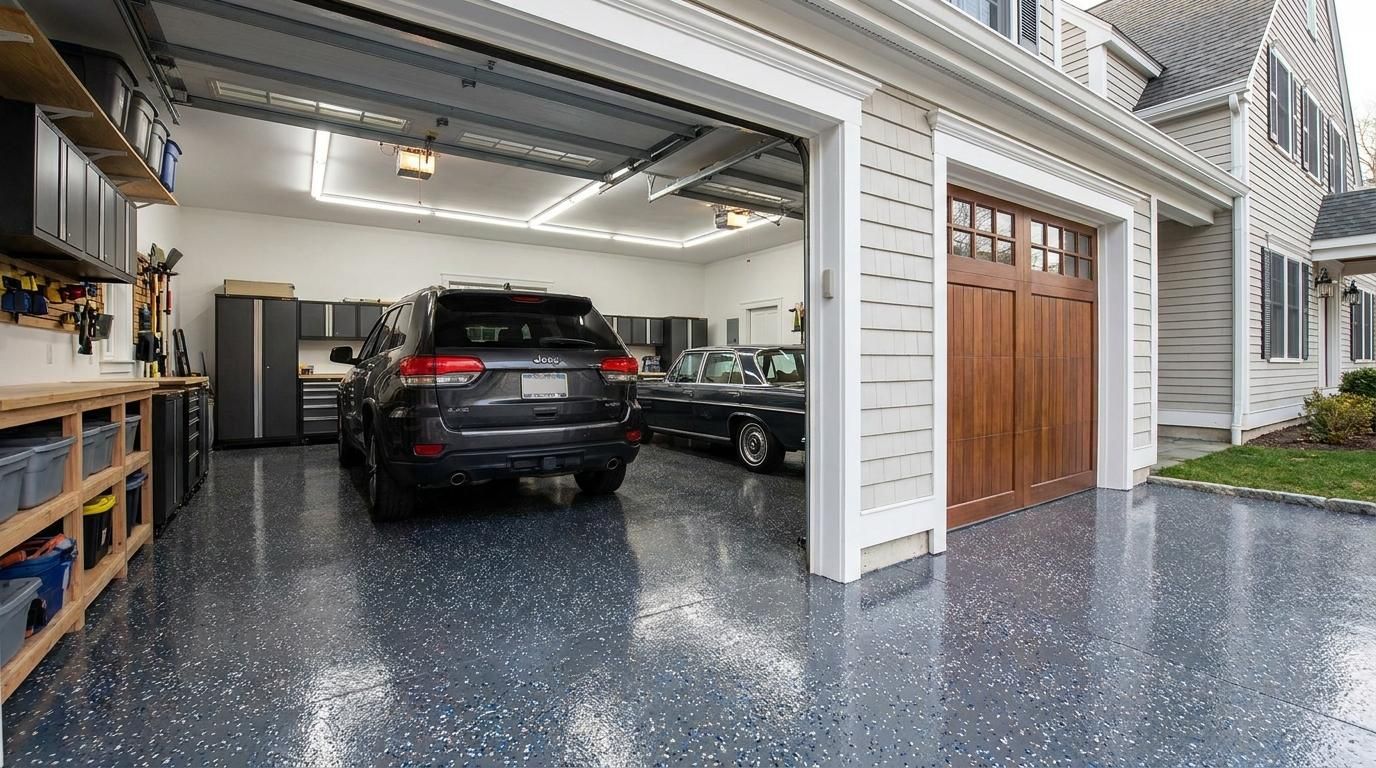
The choice between epoxy and polyurea is about which conditions each one handles best. Indoor garages with no sunlight get strong results from epoxy flake at a lower upfront cost. Outdoor surfaces, fast-turnaround projects, and spaces exposed to UV and freeze-thaw stress are where polyurea's extra $1 to $3 per square foot earns its keep. In those conditions, the upgrade avoids the recoating that standard epoxy needs every few years.
Contact LC Visions Epoxy & Coating at (724) 413-8946 for a free estimate on your garage, patio, or commercial space.