
Best Garage Floor Coating for Massachusetts Homes (2026 Guide)
The best garage floor coating for Massachusetts homes is the one matched to your concrete's condition, your garage's sun exposure, and how you use the space. Polyurea and epoxy flake systems handle road salt, freeze-thaw cycling, and daily vehicle traffic better than anything available at a hardware store, but the choice between them depends on whether the garage sees direct UV and how fast you need it back in service. Metallic epoxy fits a separate category where aesthetics drive the decision.
LC Visions Epoxy & Coating helps Worcester County homeowners pick the right residential coating system for their garage's specific conditions. This post shares what you need to know: what makes a coating the "best" in Massachusetts, how the four main coating types compare in New England conditions, and why installation quality matters more than the product label.
What Makes a Coating the "Best" in Massachusetts
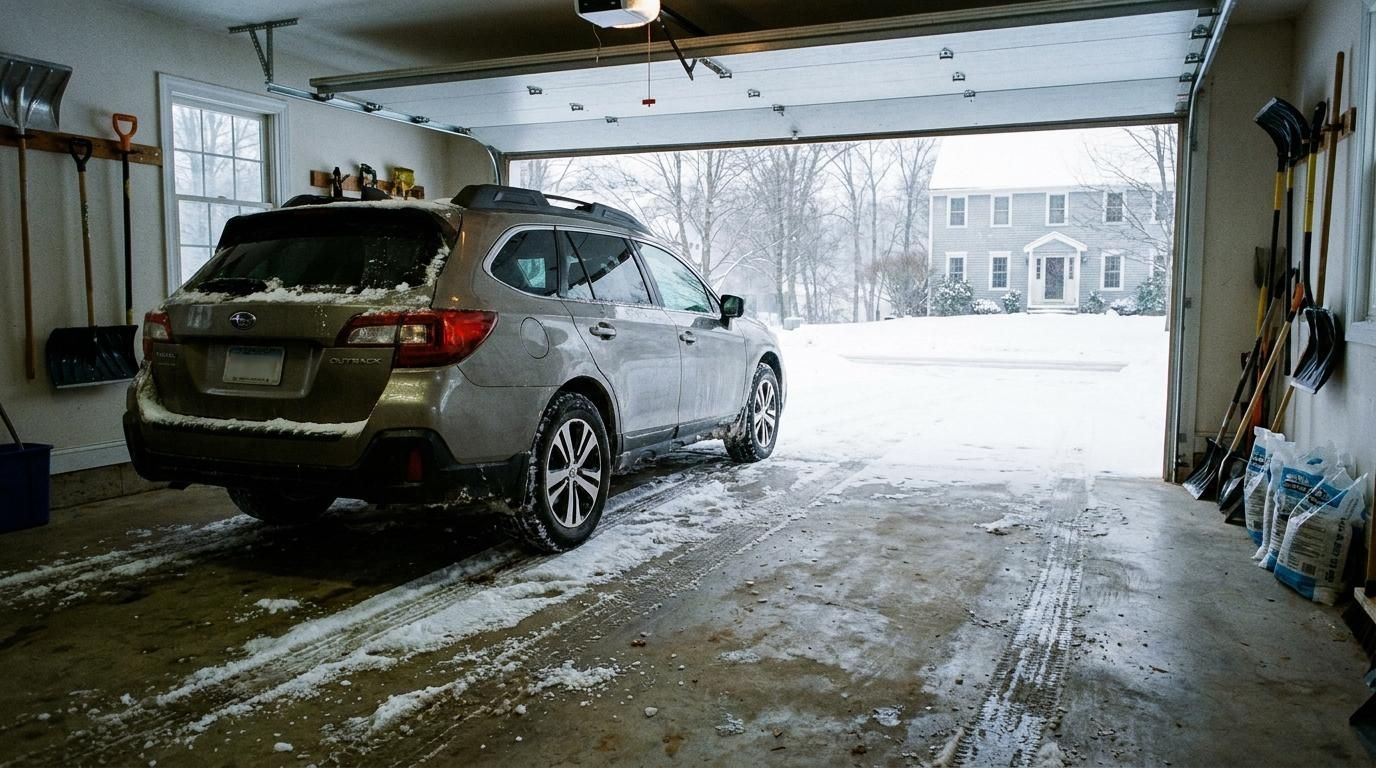
A garage floor coating that works in Arizona won't necessarily survive a Worcester County winter. Massachusetts garages face conditions that test every coating system:
- Road salt and brine tracked in from November through April attack bare concrete and degrade weak coatings from the inside out.
- Freeze-thaw cycling (35 to 40 cycles per season in central Massachusetts) causes concrete to expand and contract. Coatings without proper adhesion crack and peel.
- Moisture vapor from older slabs pushes up through concrete and traps under coatings that weren't installed with a vapor barrier.
The "best" coating is the one engineered for these conditions and installed over concrete that was properly prepped to receive it.
Top Coating Types for Massachusetts Garages
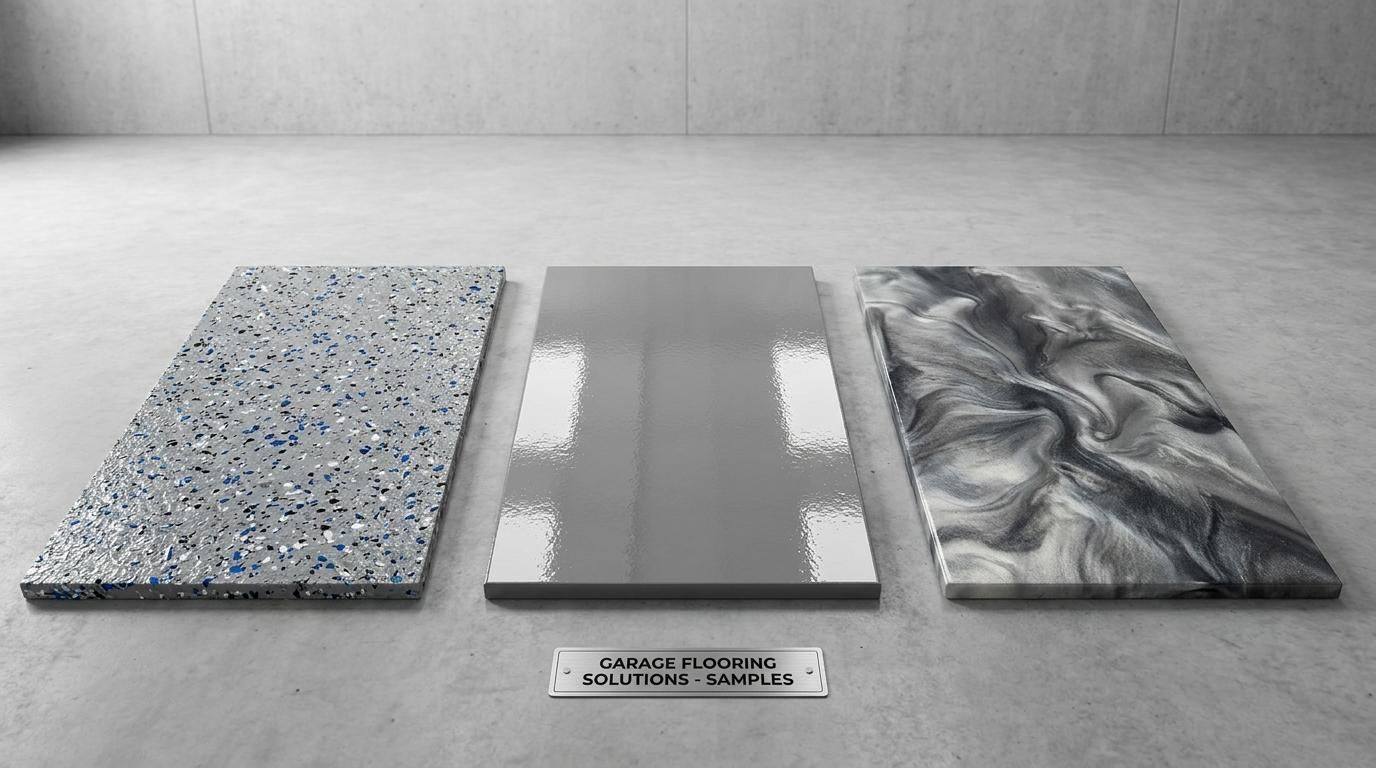
Three systems dominate the professional residential market. Each one handles New England conditions differently.
Epoxy Flake
The most popular residential garage floor coating in Massachusetts. Textured vinyl flakes provide slip resistance, hide minor imperfections, and create a finished look that brightens the space. Epoxy flake resists salt, oil, and chemical stains. It's the most affordable professional option and handles daily vehicle traffic well. The main limitation: standard epoxy can yellow when exposed to direct UV light, so it's best suited for enclosed garages.
Polyurea
Polyurea cures faster than epoxy, resists UV exposure, and flexes with concrete as it expands and contracts through freeze-thaw cycles. That flexibility makes it the strongest performer in Massachusetts conditions. It costs more than epoxy flake but lasts longer on surfaces exposed to sunlight, temperature swings, and heavy use.
Metallic Epoxy
A premium finish that creates a swirled, high-gloss surface. Metallic epoxy is ideal for finished basements, showrooms, and spaces where visual impact matters. It's more labor-intensive to install and costs more per square foot. For standard garage use, epoxy flake or polyurea delivers better long-term value.
Polyaspartic
Polyaspartic is a fast-curing system that resists UV and cures in hours instead of days. Most professional coating companies in Massachusetts, LC Visions included, use polyaspartic as a topcoat over epoxy or polyurea base layers rather than as a standalone system. If you're quoted a full polyaspartic base-to-top system, confirm what's underneath.
Why Installation Matters More Than the Product Label
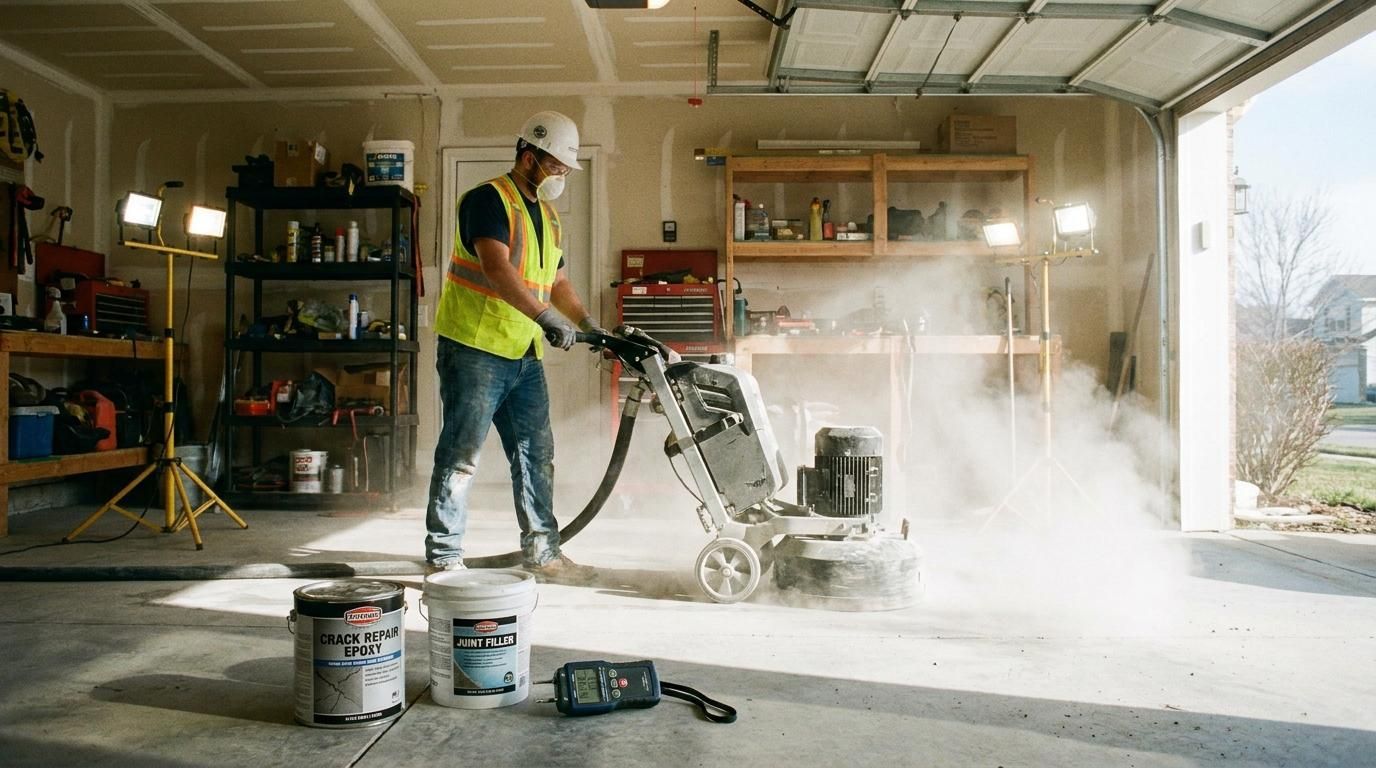
The most common garage floor coating failures in Massachusetts don't come from picking the wrong product. They come from skipping prep.
Diamond grinding, crack repair, and moisture testing account for 30% to 40% of the total project cost —and they're the reason professional systems outlast DIY kits by years. A premium polyurea applied over unprepped concrete is more likely to fail sooner than a basic epoxy flake installed over properly ground, moisture-tested concrete.
Coatings perform in Hopkinton, Marlborough, and Worcester because the installation process accounts for what Massachusetts throws at them. The product matters. The preparation underneath it matters more.
Frequently Asked Questions
What is the longest-lasting garage floor coating?
Polyurea and polyaspartic systems generally outlast standard epoxy under heavy use and UV exposure. In Massachusetts, a professionally installed polyurea system with proper concrete preparation carries manufacturer ratings of 15 to 20 years. Epoxy flake systems carry manufacturer ratings of 10 to 15 years in enclosed garages. Surface preparation is the biggest factor in any coating's lifespan.
Is polyurea better than epoxy for a garage floor?
Polyurea outperforms epoxy in UV resistance, flexibility, and cure time. It handles Worcester County's freeze-thaw cycles better because it flexes with the concrete instead of cracking. LC Visions Epoxy & Coating installs both systems and recommends polyurea for garages with direct sunlight or extreme temperature swings.
Can I coat my garage floor myself?
DIY epoxy kits from hardware stores cost less upfront but use water-based formulas far thinner than professional-grade coatings. Without mechanical grinding and moisture testing, most DIY coatings in Massachusetts peel within one to two winters. Professional installation costs more initially but avoids the expense of stripping and redoing a failed floor.
The Concrete Underneath Affects the Outcome
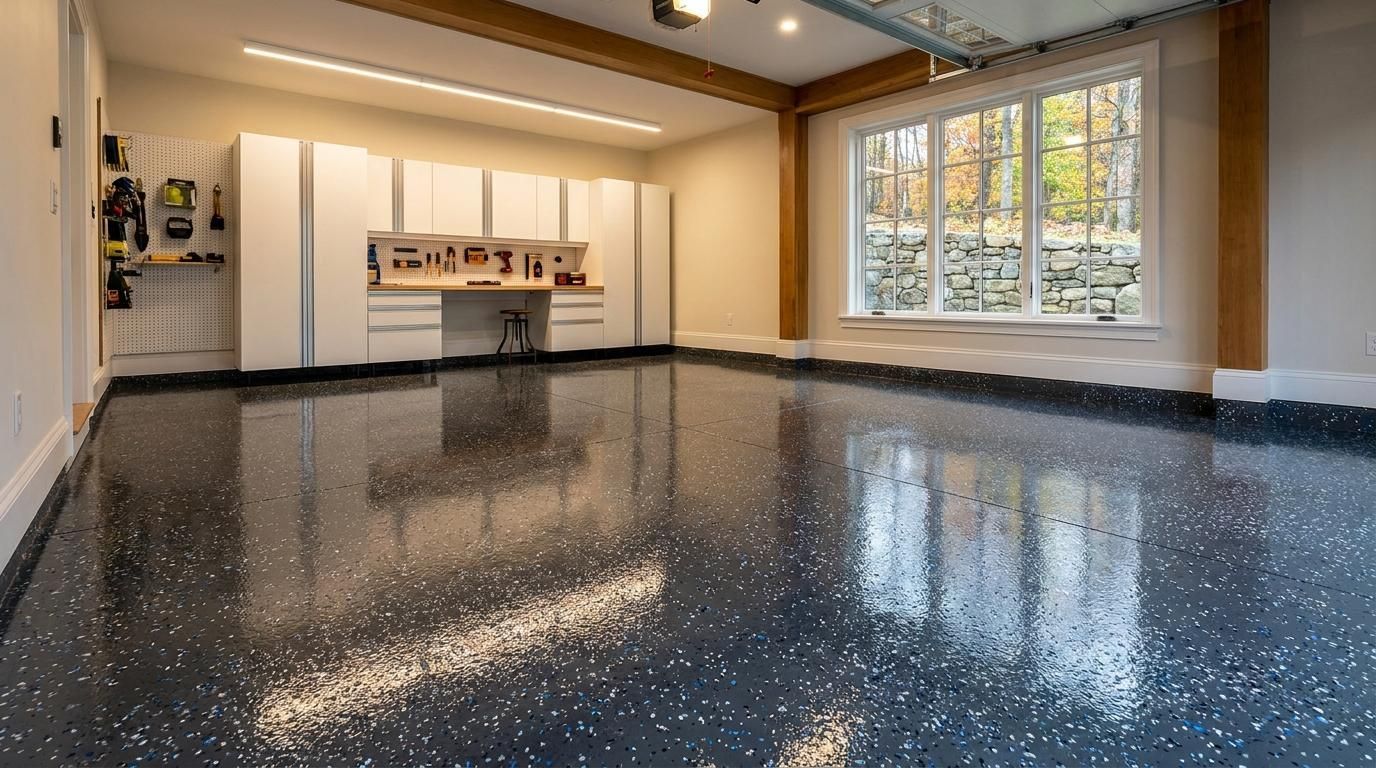
Epoxy flake delivers the best value for most enclosed residential garages. Polyurea earns the upgrade for garages exposed to UV, temperature extremes, or heavy daily use. Metallic epoxy fits spaces where aesthetics drive the decision. What matters most in Worcester County isn't the coating's brand name or chemistry. It's whether the concrete underneath was ground, patched, tested for moisture, and prepped to hold the system for a decade or more. A premium polyurea applied over rushed prep fails before a basic epoxy flake installed over a properly profiled slab.
Contact LC Visions Epoxy & Coating at (724) 413-8946 for a free estimate on the right system for your garage.