
How to Clean an Epoxy Garage Floor: Step-by-Step Guide (2026)
Cleaning an epoxy garage floor requires three things: a soft-bristle broom, a microfiber mop, and a pH-neutral cleaner. Weekly sweeping prevents grit from scratching the finish, monthly mopping keeps the gloss intact, while avoiding bleach, ammonia, vinegar, and abrasive pads protects the chemical bond that holds the coating together. A garage floor caked in road salt and tracked-in mud after a New England winter wipes clean in ten minutes on a properly maintained coated surface.
LC Visions Epoxy & Coating applies professional-grade concrete floor coatings across Worcester County, built for exactly this kind of low-effort, long-term care. This article teaches readers a simple weekly and monthly cleaning routine, how to remove tough stains like oil and tire marks, and the cleaning products that quietly destroy epoxy if used regularly.
Weekly and Monthly Cleaning Routine
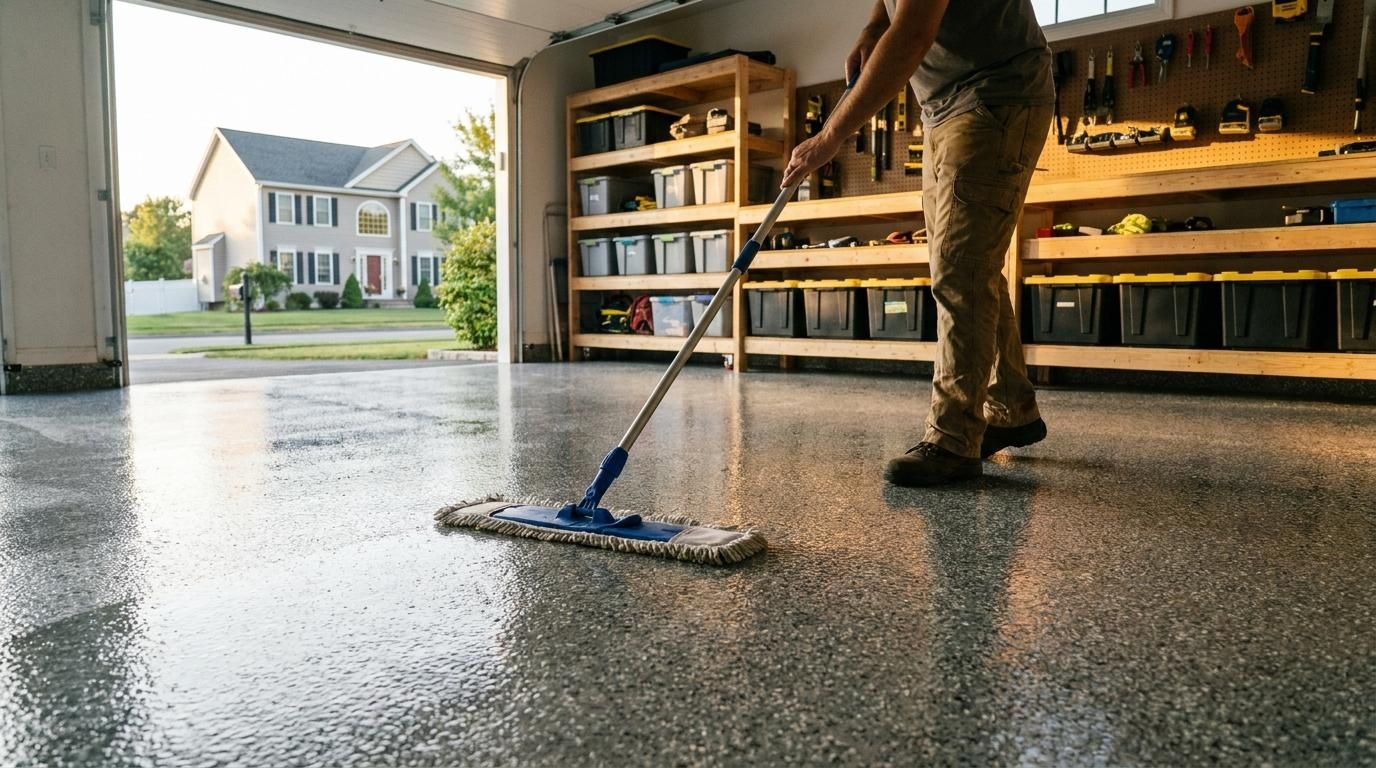
A simple schedule keeps an epoxy garage floor looking new for years. Here's what each interval looks like.
Weekly
Sweep or vacuum the entire floor with a soft-bristle broom or shop vac. This removes sand, road salt, and small debris before they can scratch the coating's surface. In Worcester County, weekly sweeping matters most from November through April when boots and tires track salt and sand onto the garage floor daily. Even small particles act like sandpaper underfoot and gradually dull the finish if left in place.
Monthly
Mop the floor with warm water and a pH-neutral cleaner. Diluted Simple Green or a few drops of dish soap in a bucket of warm water both work well. Use a microfiber mop, wring it thoroughly, and work in sections. Rinse with clean water afterward to prevent cleaner residue that can dull the shine and make the floor feel tacky. Dry the floor with a clean towel or let it air dry with the garage door cracked open.
Seasonal Deep Clean
In late April and again in October, do a deeper clean to clear the salt, grime, and moisture buildup that accumulates through a New England winter. Scrub expansion joints and floor edges with a soft nylon brush. This is also a good time to inspect for early signs of coating wear: chips, cloudy patches, or small areas where adhesion has weakened.
How to Remove Tough Stains
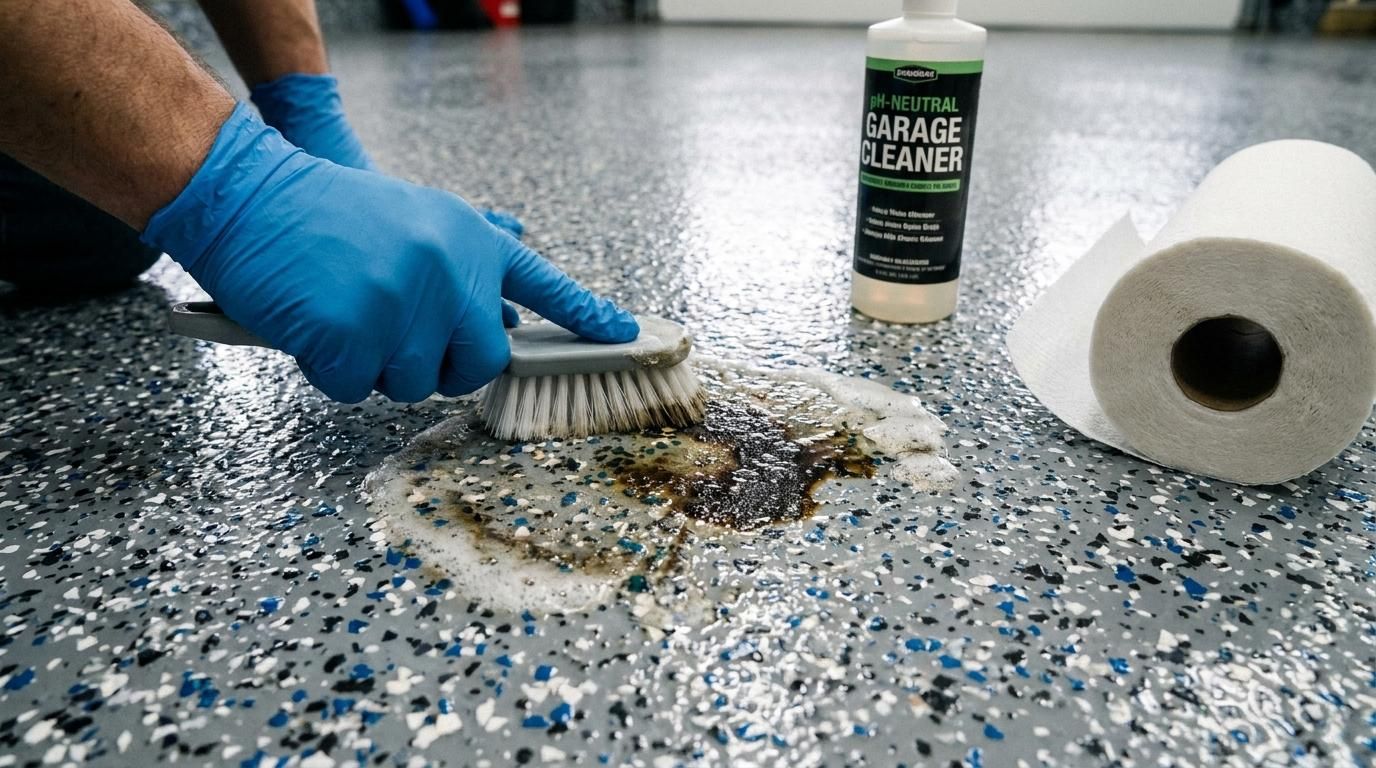
Oil drips, tire marks, and chemical spills happen in every working garage. Acting quickly and using the right approach for each stain type prevents permanent damage.
- Oil and grease: Blot the spill immediately with paper towels. Apply a pH-neutral degreaser, let it sit for five minutes, and scrub gently with a soft nylon brush. Rinse thoroughly with clean water.
- Tire marks: Hot-tire transfer leaves dark streaks on epoxy surfaces. A nylon scrub pad with diluted Simple Green removes most marks without scratching the coating.
- Road salt film: Mix warm water with a tablespoon of dish soap and mop the affected area. Salt residue left through spring can etch the topcoat if ignored long enough.
For stains that resist these methods, the issue may be deeper than surface contamination. Discoloration that won't lift sometimes indicates the coating has been chemically compromised.
Never Use These on an Epoxy Floor
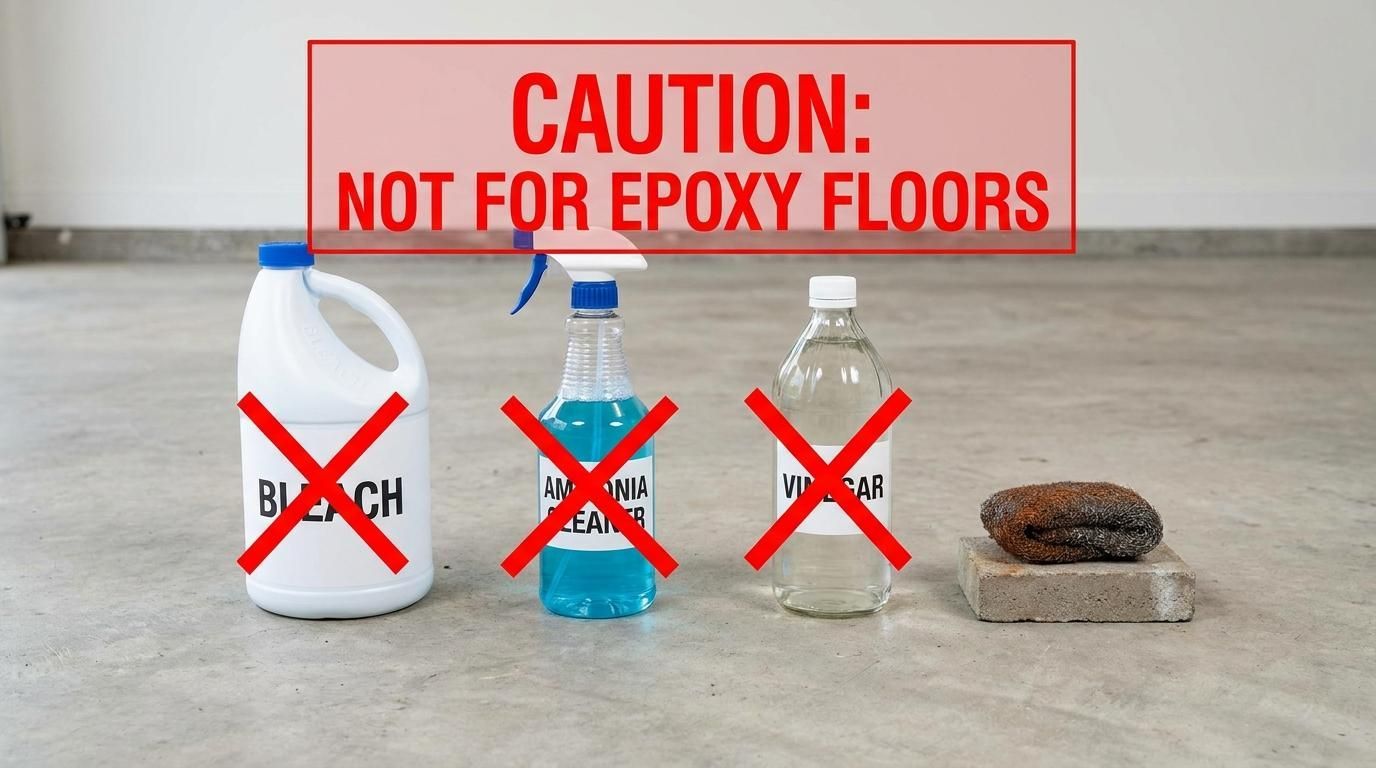
The wrong cleaning products cause more damage than dirt ever will. These are the most common mistakes:
- Bleach and ammonia-based cleaners strip the epoxy's chemical bond over time, causing clouding and eventually coating failure.
- Vinegar and citrus cleaners are too acidic for epoxy surfaces. They eat through the topcoat's gloss and weaken stain resistance after repeated use.
- Steel wool and abrasive pads scratch the finish and create microscopic entry points for moisture and road salt.
- Pressure washers used indoors force water under the coating's edge, especially around expansion joints and garage door thresholds. A garden hose on low pressure is safe for rinsing heavy mud.
If the floor needs more than a mop and soft brush can handle, the issue is usually coating wear, not insufficient cleaning power. A professional evaluation catches problems before they require a full strip and recoat.
Frequently Asked Questions
Can I use a pressure washer on an epoxy garage floor?
Outdoor pressure washing is generally safe at low settings. Indoor use is riskier because high-pressure water can force moisture under the coating's edges, particularly around joints and cracks. A garden hose or damp mop handles most indoor cleaning without that risk.
How often should I deep clean a coated garage floor?
Most Worcester County homeowners find that a thorough mop with a pH-neutral cleaner once a month keeps their floor in top shape. Twice a year, do a more detailed clean. Scrub corners, expansion joints, and edges where salt residue accumulates during the winter months.
Will cleaning products void my floor coating warranty?
Harsh chemicals like bleach, acid-based cleaners, and abrasive tools can void many coating warranties. Stick with pH-neutral cleaners and soft-bristle tools. If you're unsure about a product, test it in a small hidden area first or ask your installer for approved options.
When Cleaning Stops Producing Results
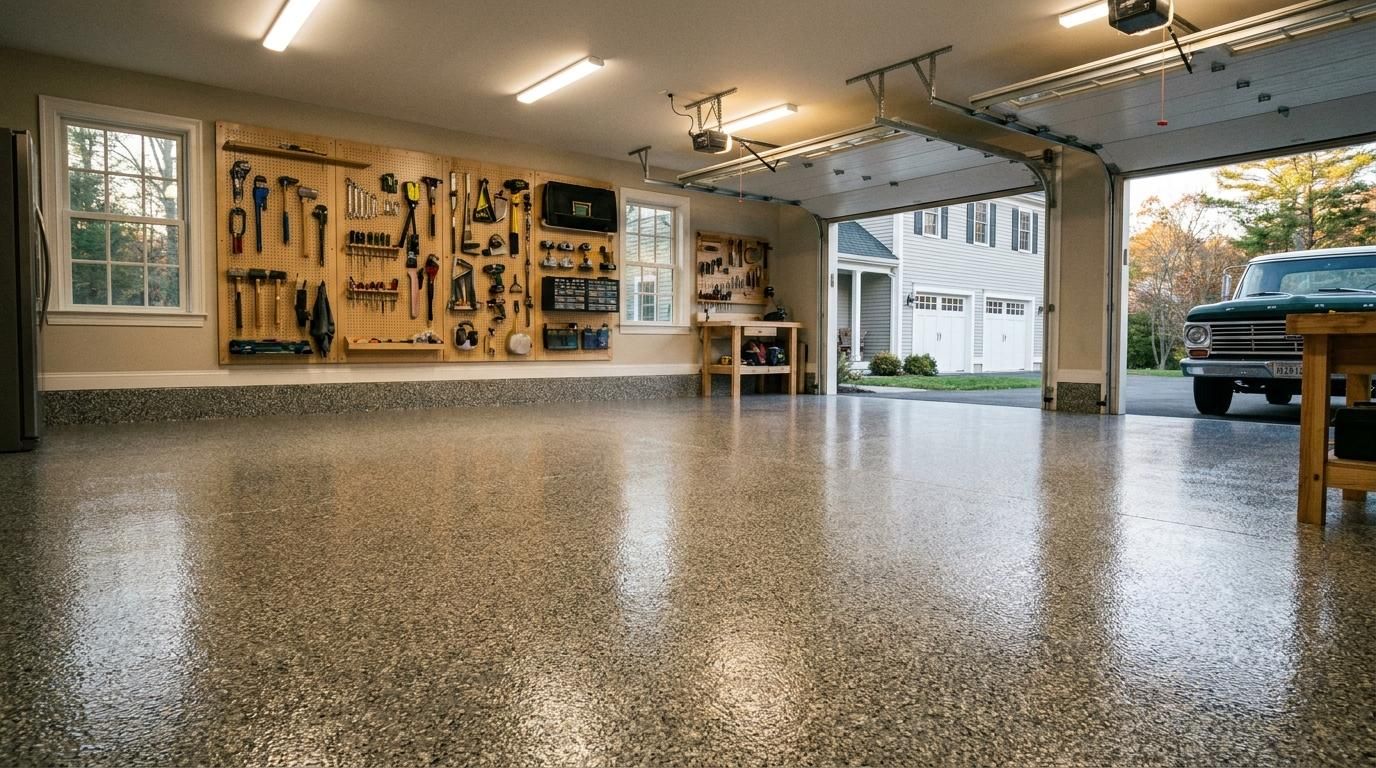
An epoxy garage floor is designed to last a decade or more when consistent, low-effort cleaning pairs with quality installation. Weekly sweeping prevents grit from grinding into the surface. Monthly pH-neutral mopping keeps the gloss intact and stops salt residue from doing slow damage between seasons. When cleaning alone stops producing results (peeling edges, cloudy patches, or stains that won't lift), the issue is no longer about products or technique. It's the coating itself, and the cause traces back to prep or material decisions made before the floor was ever installed.
Contact LC Visions Epoxy & Coating at (724) 413-8946 for a free floor assessment or to schedule a new coating installation.