
Epoxy Garage Floor Pros and Cons Every Worcester County Homeowner Should Know
Epoxy garage floors deliver chemical resistance against road salt and motor oil, easy cleanup, slip-resistant flake textures, and a 10- to 15-year lifespan at $4 to $8 per square foot installed. The tradeoffs are real: standard epoxy yellows under UV exposure, requires 48 to 72 hours of cure time before parking, and depends entirely on whether the concrete underneath was diamond-ground and tested for moisture before the first coat. Skip that prep, and the same coating that lasts a decade in one garage peels within a year in another.
LC Visions Epoxy & Coating installs epoxy flake and metallic epoxy systems across Worcester County with proper surface prep. See what epoxy does well in a Massachusetts garage, where it falls short, and which conditions make the difference between a ten-year floor and a one-year floor.
The Pros: What Epoxy Does Well in a Massachusetts Garage
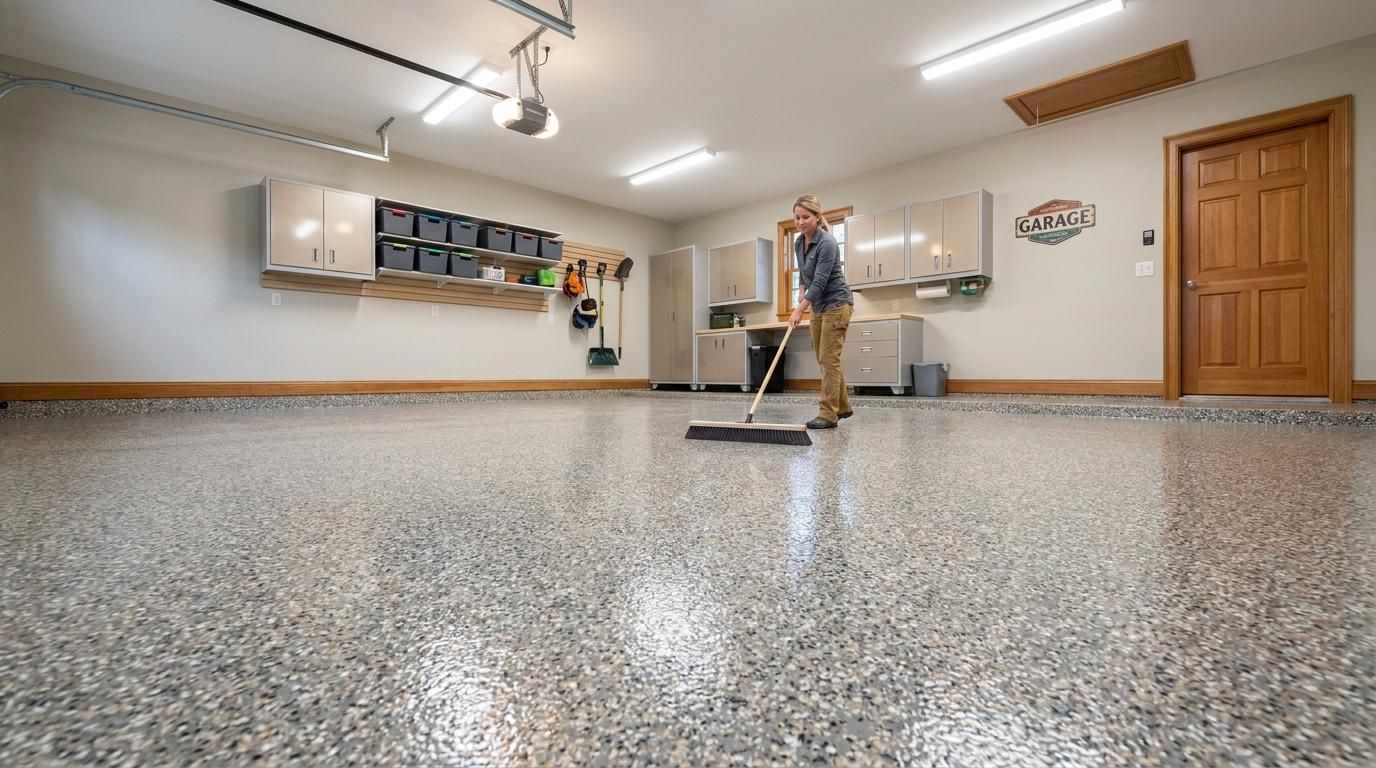
Epoxy flake flooring earns its popularity for concrete, measurable reasons.
Durability Against Salt, Oil, and Chemicals
A professional epoxy system handles road salt, motor oil, brake fluid, and most household chemicals without staining or softening. For Worcester County garages that absorb deicing compounds every winter, that chemical resistance protects the slab underneath.
Lower Cost Than Premium Alternatives
Epoxy flake typically runs $4 to $8 per square foot installed, compared to $5 to $10 for polyurea and $7 to $12 for metallic epoxy. For a standard two-car garage, most projects land between $1,600 and $4,000.
Easy Maintenance
Sealed epoxy repels dust, resists staining, and wipes clean with a mop and mild cleaner. No sealing, no waxing, no specialty products required.
Slip Resistance With Flake Texture
Vinyl flake broadcasts create a textured surface that provides traction even when wet. The flake particles disrupt the topcoat's surface tension, creating thousands of micro-edges that grip boot soles and tire treads the way a non-slip mat does. This is the strongest case for flake over plain epoxy or metallic epoxy in a daily-use garage. Homeowners with mobility concerns, young children, or older relatives benefit most from the added grip.
The Cons: Where Epoxy Falls Short
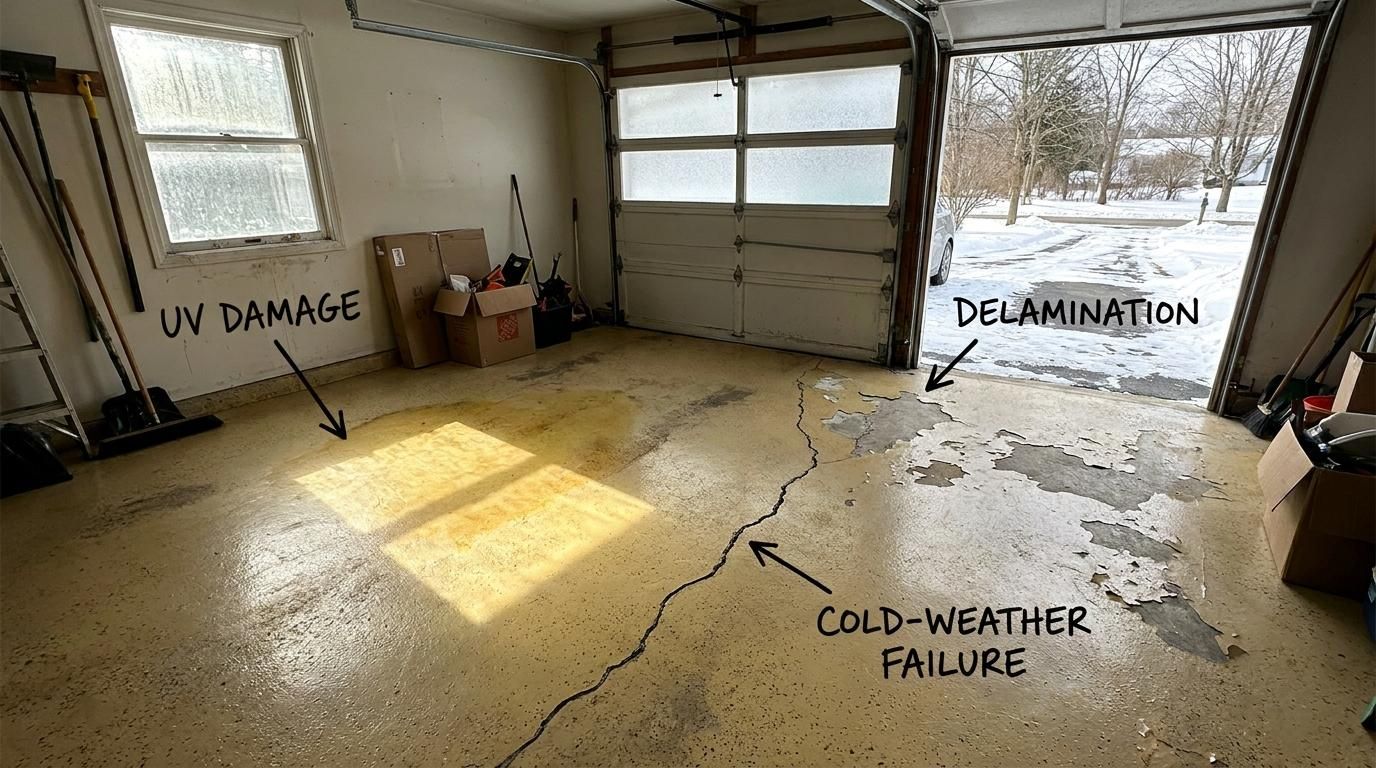
Epoxy floors have real limitations that show up faster in New England than in milder climates.
UV Sensitivity
Standard epoxy yellows and chalks when exposed to direct sunlight. For indoor garages, this rarely matters. For patios, entryways, or garages with south-facing windows, polyurea is the better choice because it won't degrade under UV exposure.
Longer Cure Times
Epoxy requires 48 to 72 hours before you can park on it. Polyurea cures in a fraction of that time. If three days without your garage creates a real problem, ask about options that cure faster.
Cold-Weather Installation Challenges
Epoxy adhesion suffers when ambient temperatures drop below 50°F. Worcester County's shoulder seasons, late October through April, narrow the window for optimal installation unless the garage can be heated during the process.
Delamination Risk Without Proper Prep
This is the biggest failure mode. Epoxy bonds mechanically to concrete, meaning the surface must be diamond-ground to the correct profile. Skip that step, as most DIY kits do, and the coating peels. The difference between a ten-year floor and a one-year floor starts with prep, not product.
Frequently Asked Questions
How long does an epoxy garage floor last in Massachusetts?
With professional installation and proper surface prep, epoxy garage floors are designed to last 10 to 20 years in Worcester County conditions. Road salt, freeze-thaw cycles, and hot tire stress all shorten that lifespan when the prep work or product quality falls short of what the environment demands.
Is epoxy worth it for a garage floor?
For most indoor garages, yes. The combination of chemical resistance, durability, and lower cost makes epoxy one of the strongest value options for residential floors. LC Visions Epoxy & Coating recommends epoxy flake for standard garages and polyurea for outdoor or UV-exposed surfaces where epoxy's limitations matter most.
Can I apply epoxy to my garage floor myself?
You can, but DIY kits use thinner formulations and rely on acid etching instead of diamond grinding. Professional installations last significantly longer because the surface prep, material grade, and application technique are all built for long-term performance rather than weekend convenience.
Durable Coatings Start With Solid Prep
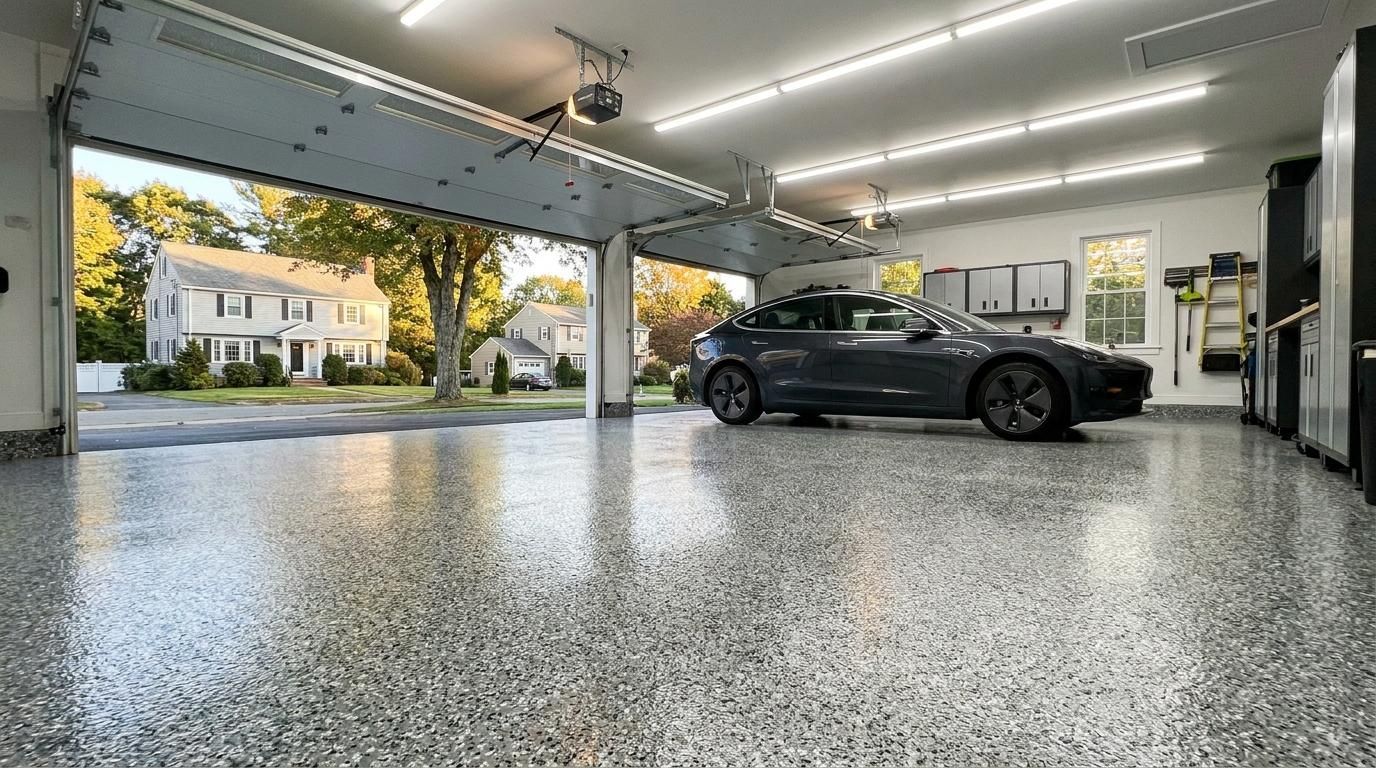
Epoxy is a strong choice for most Worcester County garages when it's installed on properly prepared concrete with professional-grade materials and a full cure before parking. The cons matter most when those steps are skipped. They hit hardest when the surface sees direct UV that the coating wasn't built to handle. Understanding where epoxy fits (enclosed garages, daily driver use, moderate climate exposure) and where it doesn't (south-facing entryways, outdoor patios, garages with three-day downtime constraints) puts you in a better position than choosing based on price alone.
Contact LC Visions Epoxy & Coating at (724) 413-8946 to talk through which system fits your garage, your budget, and your timeline.