
Hot Tire Pickup on Epoxy Garage Floors: Why It Happens and How to Prevent It
Hot tire pickup happens when heated tires soften an epoxy garage floor coating, bond to the surface, and peel it away when the car moves. Tires routinely reach 140°F or higher after highway driving, which exceeds the softening point of many standard epoxy systems (120°F to 150°F). The result shows up as rubber transfer marks or actual chunks of coating lifting in the exact spots where the front tires park. It isn't normal wear, and it isn't a tire problem—it's a sign the coating wasn't built for the thermal stress a daily-driven garage produces.
LC Visions Epoxy & Coating applies heat-resistant garage floor coatings across Worcester County selected specifically to withstand this kind of daily stress. This post explains what causes hot tire pickup, which coating systems resist it (and which fail under it), and what to demand from any installer before signing off on a quote.
What Causes Hot Tire Pickup
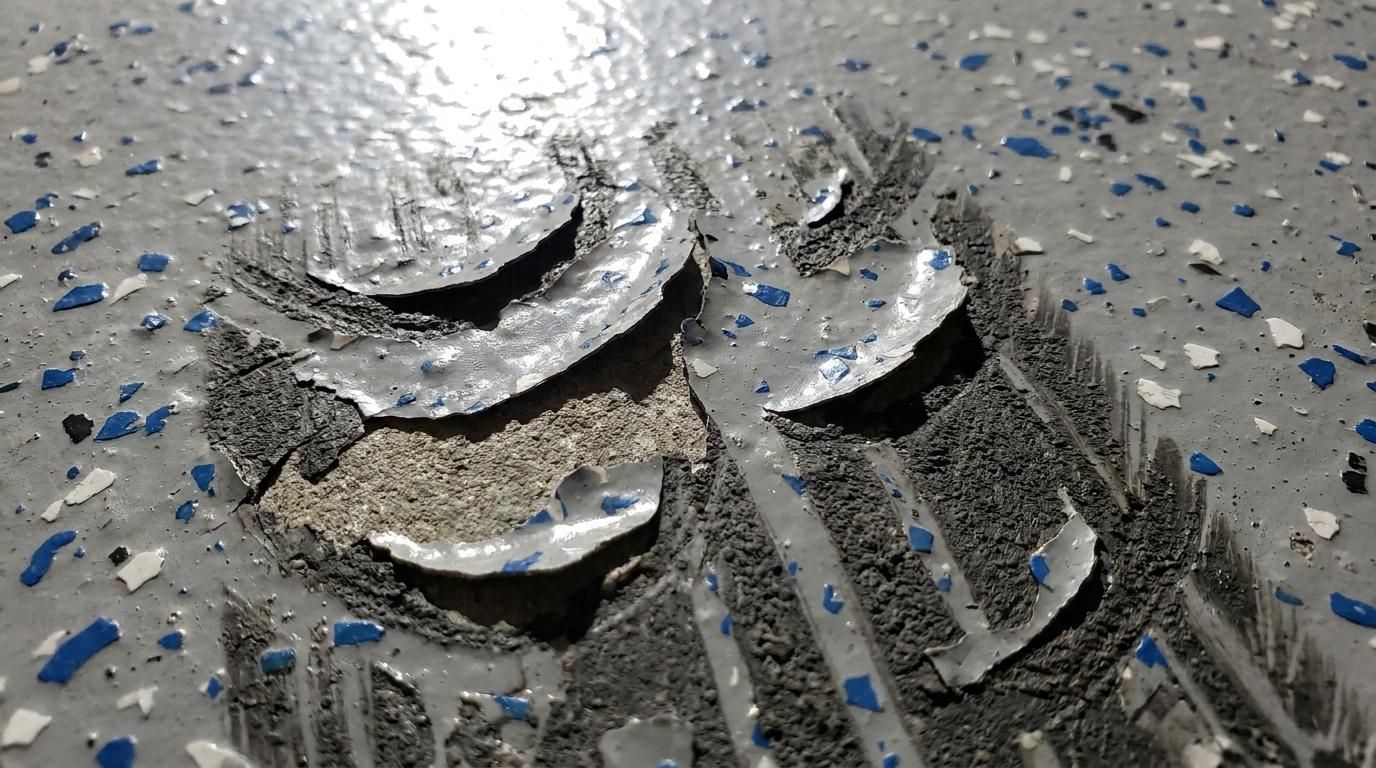
Hot tire pickup is a heat-transfer problem. Every time you park after driving, your tires release stored heat directly into the coating underneath.
Temperature and Softening
Standard epoxy begins to soften between 120°F and 150°F. On a summer day, tires routinely reach 140°F or more after highway speeds. The coating softens under the tire, rubber compounds bond to the surface, and when the car moves again, the coating peels up with it.
Poor Surface Prep
Coatings that weren't mechanically bonded to the concrete fail faster under thermal stress. Without diamond grinding to create a proper surface profile, heat weakens the adhesive bond and the coating separates from the slab. Poor prep is the most common factor behind coating failures in Worcester County garages.
Low-Quality or DIY Products
Consumer-grade epoxy kits sold at hardware stores use thinner formulations with lower heat tolerance. These products are the most common source of hot tire damage and the kind of epoxy floor bubbling and delamination that Worcester County homeowners see after a single summer of daily parking.
Which Coatings Resist Hot Tire Pickup
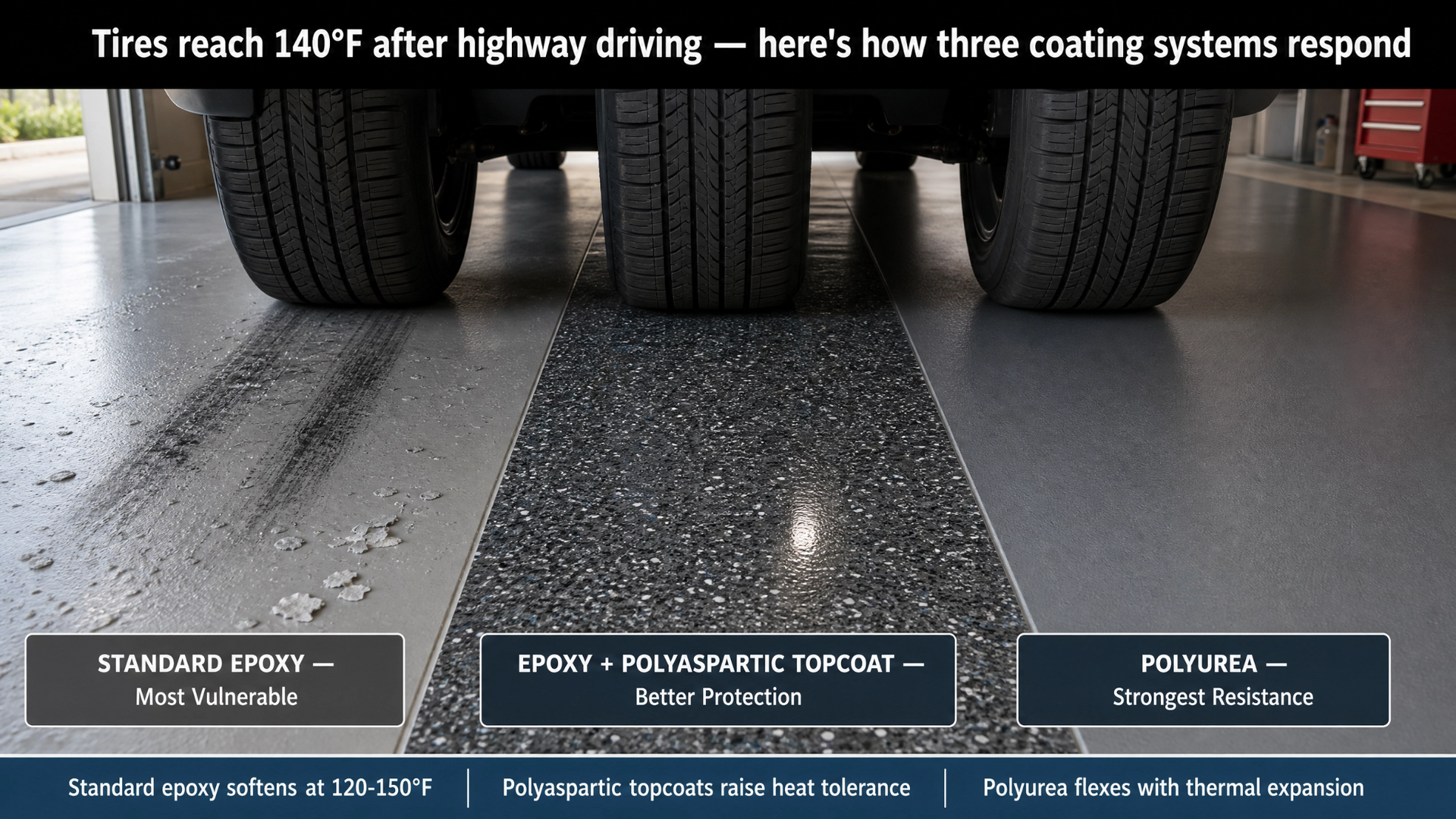
Not every garage floor coating handles heat the same way. The difference comes down to chemistry and how the system responds to repeated heating and cooling.
- Standard epoxy: Most vulnerable. Softening point sits around 120°F to 150°F. Works well in light-use garages but struggles under repeated hot-tire contact without a protective topcoat.
- Epoxy with polyaspartic topcoat: The topcoat raises heat resistance and adds a harder, more flexible barrier between the tire and the epoxy base. This is the system LC Visions uses on most residential garage projects.
- Polyurea: UV-stable and heat-resistant, polyurea systems flex with thermal expansion instead of softening. Strongest option for garages that see daily high-temperature parking.
Worcester County garages go from below-freezing overnight to sun-heated slab temperatures in the same week during spring and fall. Rigid coatings crack under that cycling. Flexible ones survive.
How to Prevent Hot Tire Pickup on Your Garage Floor
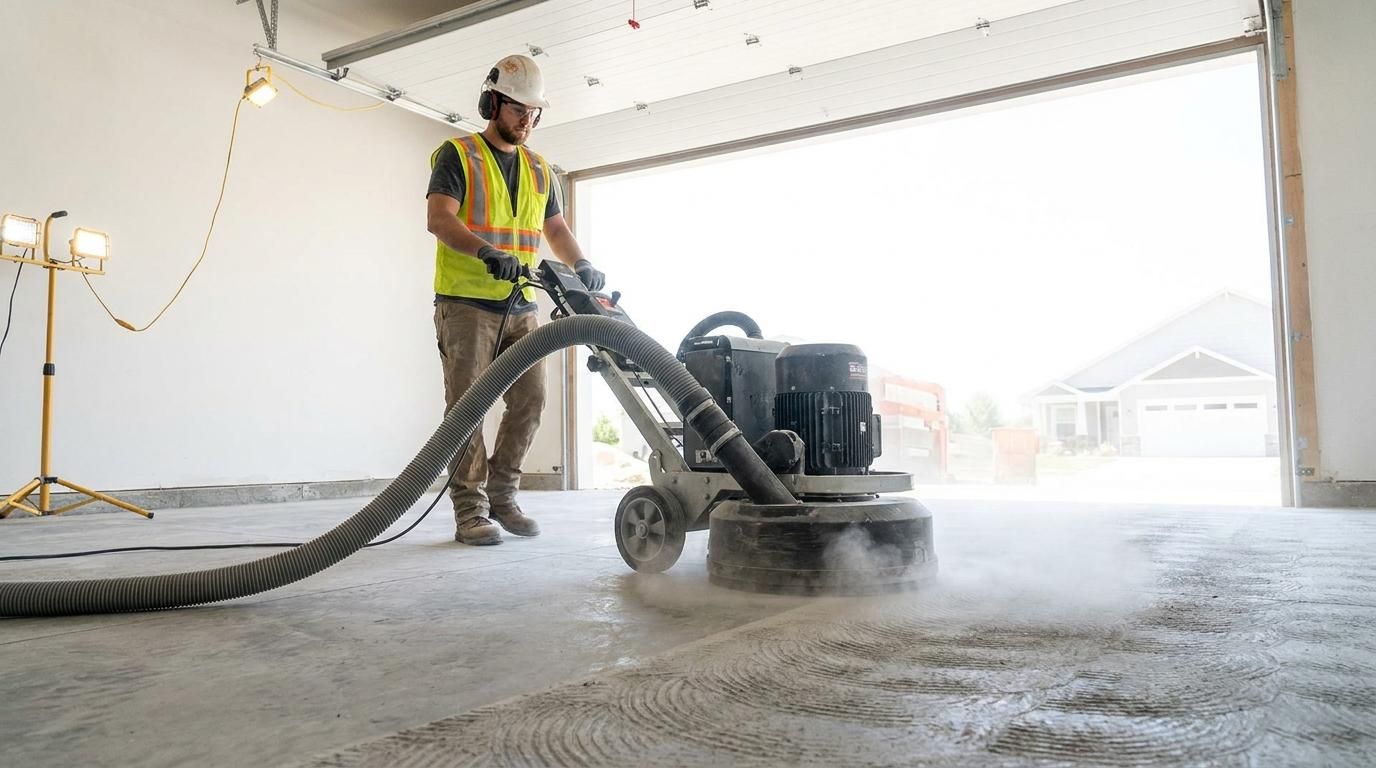
Prevention starts before the coating goes down.
- Insist on diamond grinding. Mechanical grinding creates the surface profile that keeps coatings bonded under thermal stress. Acid etching, the shortcut in most DIY kits, doesn't cut deep enough.
- Choose a professional-grade topcoat. A polyaspartic or polyurea topcoat over an epoxy base dramatically improves hot-tire resistance. The topcoat takes the heat instead of the base layer.
- Allow full cure time. Parking on a coating before it's fully cured, at least 72 hours for most epoxy systems, makes hot tire pickup far more likely. Incomplete curing leaves the surface soft and vulnerable.
- Skip DIY kits for daily-driver garages. Consumer products aren't formulated for the thermal stress a garage floor absorbs every day from commuter vehicles.
Frequently Asked Questions
Will hot tire pickup damage my entire garage floor?
Not immediately, but it spreads. It typically starts in the two spots where your front tires sit and expands outward as the compromised area grows. Catching it early, when you first notice rubber residue or small peel marks, gives you the best chance of a targeted repair instead of a full recoat.
Can I fix hot tire pickup without replacing the whole floor?
In some cases, a professional can spot-repair the affected area and apply a new topcoat. If the damage is limited to the tire zones and the surrounding coating is still well-bonded, a localized repair may work. Widespread peeling usually means the original prep or product wasn't adequate for the job.
Does LC Visions use coatings that resist hot tire pickup?
Yes. LC Visions Epoxy & Coating uses commercial-grade epoxy base coats with polyaspartic topcoats on most garage projects across Worcester County. The combination raises heat tolerance well above standard epoxy and provides the flexibility needed for New England's temperature swings.
Build the Floor for the Heat It Faces
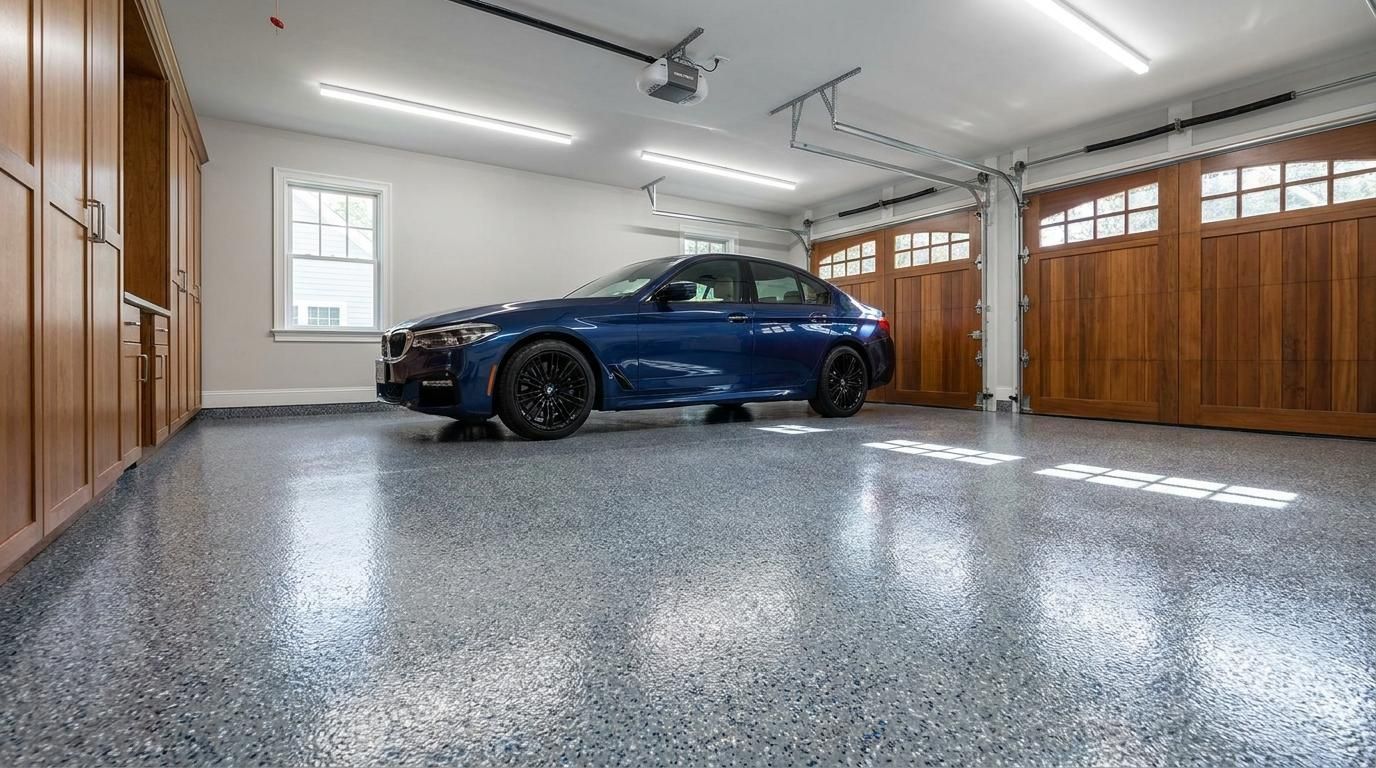
Hot tire pickup is a mismatch between the coating and the daily heat a Massachusetts garage produces. Preventing it requires the right prep, the right product, and an installer who builds the floor for the heat a daily commuter brings home every afternoon. A polyaspartic topcoat over a properly ground epoxy base handles the temperature swings that defeat hardware store kits within a single summer. The difference is a floor that lasts two years and one that lasts fifteen.
Contact LC Visions Epoxy & Coating at (724) 413-8946 to get a garage floor system built for what your space actually goes through.