
Concrete Floors Pros and Cons: A Homeowner's Guide
Concrete floors are durable, affordable, and low-maintenance, while bare slabs are cold, prone to dusting, and quick to stain. Whether the pros outweigh the cons comes down to moisture, comfort, and the finish over the slab. Which side wins comes down to moisture, comfort, appearance, and the finish placed over the slab. LC Visions Epoxy & Coating improves existing slabs with concrete floor coatings so the floor you already have works harder.
Bare concrete feels practical but unfinished. A coated floor is easier to clean, brighter, and far better protected against Worcester County salt, snowmelt, and basement moisture. Let's take a closer look at the real advantages of concrete floors, their honest tradeoffs, and where epoxy flake, metallic epoxy, or polyurea changes the math.
The Main Pros of Concrete Floors
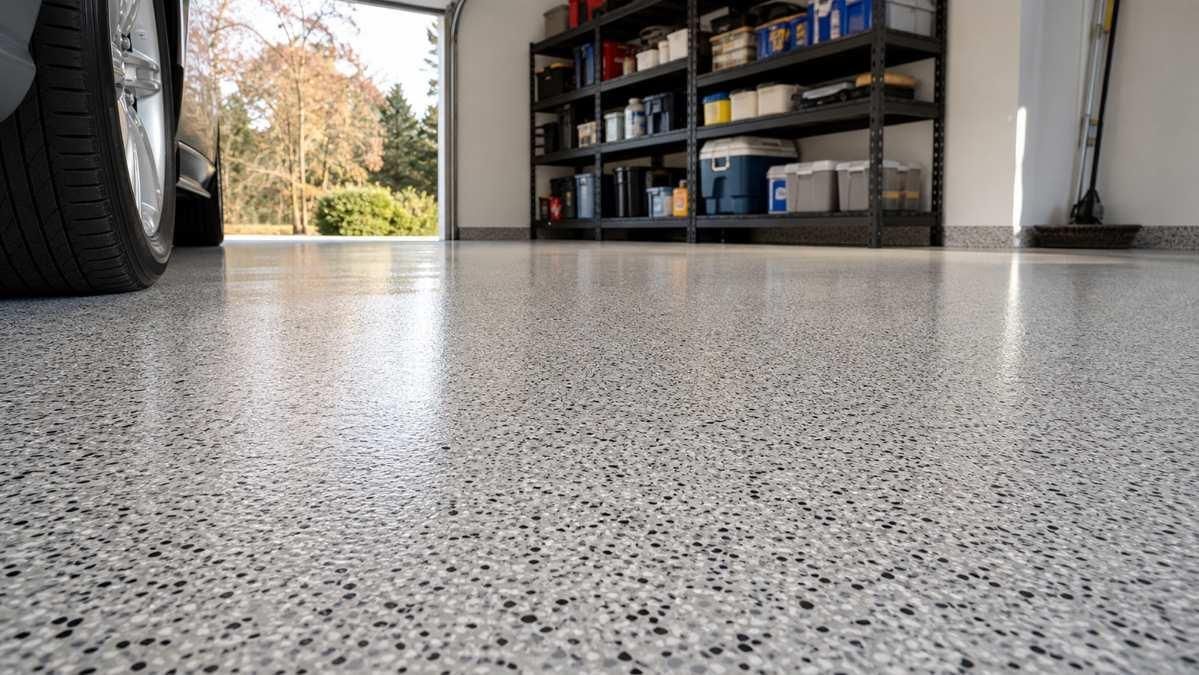
Concrete floors start with one useful advantage: the slab is already there in many garages, basements, utility rooms, and patios. Instead of adding a separate floor covering, homeowners can improve the existing surface.
A properly coated concrete floor can handle everyday use well. In garages, it resists dust, tire marks, road grime, and the salt that gets dragged in after New England storms. In basements, it avoids the seams and soft materials that can trap moisture.
The biggest advantages are practical:
- Durability: Coated concrete handles foot traffic, storage, and vehicle use.
- Cleanup: Smooth coatings reduce dust and wipe clean faster than bare concrete.
- Design range: Flake, metallic, and solid finishes create different looks.
- Moisture tolerance: Correct prep and vapor barriers help manage damp slabs.
- Long service life: Professional systems can last 10 to 20+ years with proper prep.
Design matters too. A garage floor does not have to stay gray and dusty. Metallic epoxy flooring can create a high-gloss marbled look that works well for interior spaces like basements, gyms, showrooms, and hobby rooms.
A bare slab is just the starting point. The best garage floor coating for your space is what turns durable but plain concrete into a floor that's easy to clean, slip-resistant, and finished. The system should match how the room is used, not just the color you had in mind.
The Cons Homeowners Should Weigh
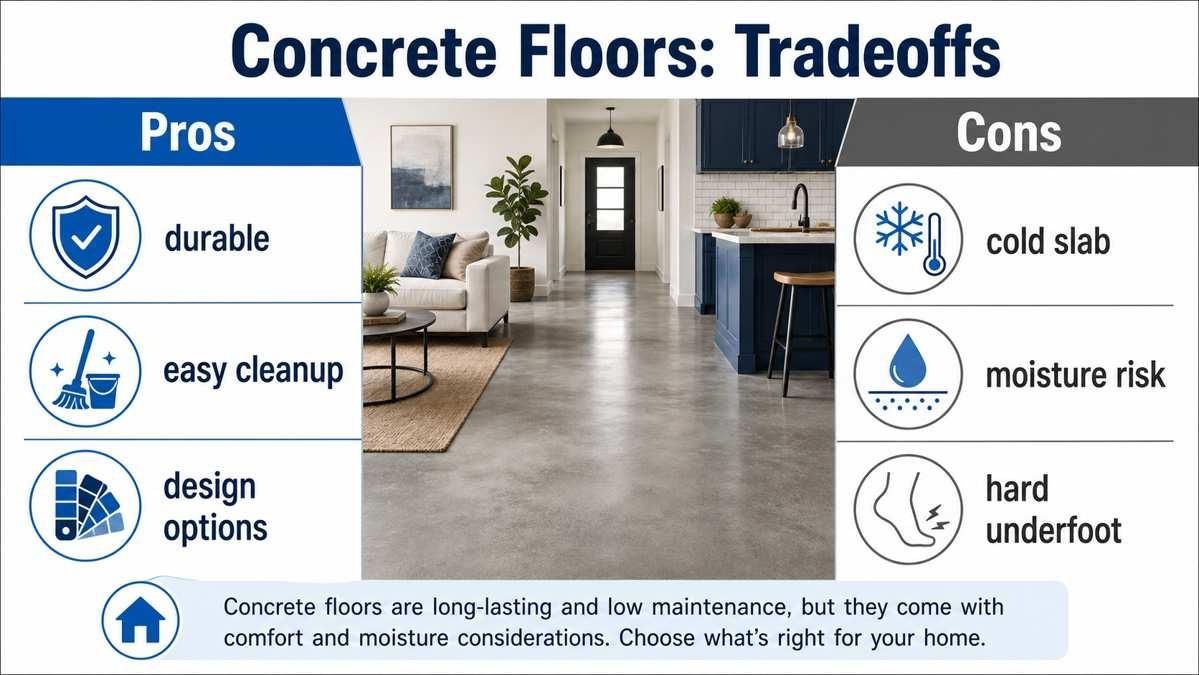
Concrete floors also have drawbacks, especially when the slab stays bare. Concrete is hard underfoot, can feel cold, and may absorb stains if it is not sealed or coated correctly.
Moisture is the biggest concern in Massachusetts homes. Older Worcester County basements often transmit vapor through the slab. If that moisture pushes against a coating with poor prep, bubbling or peeling can appear.
Common drawbacks include:
- Bare concrete can dust and shed powder.
- Uncoated slabs absorb oil, salt, and spills.
- Smooth glossy finishes can be slippery when wet.
- Cold slabs can make basements feel less comfortable.
- Cracks need evaluation before coating.
A coating can improve a stable slab, but it cannot turn a moving slab into a structural repair. If a floor has heaving, major settlement, or active drainage problems, those issues need attention before finish selection.
How Coatings Change the Pros and Cons
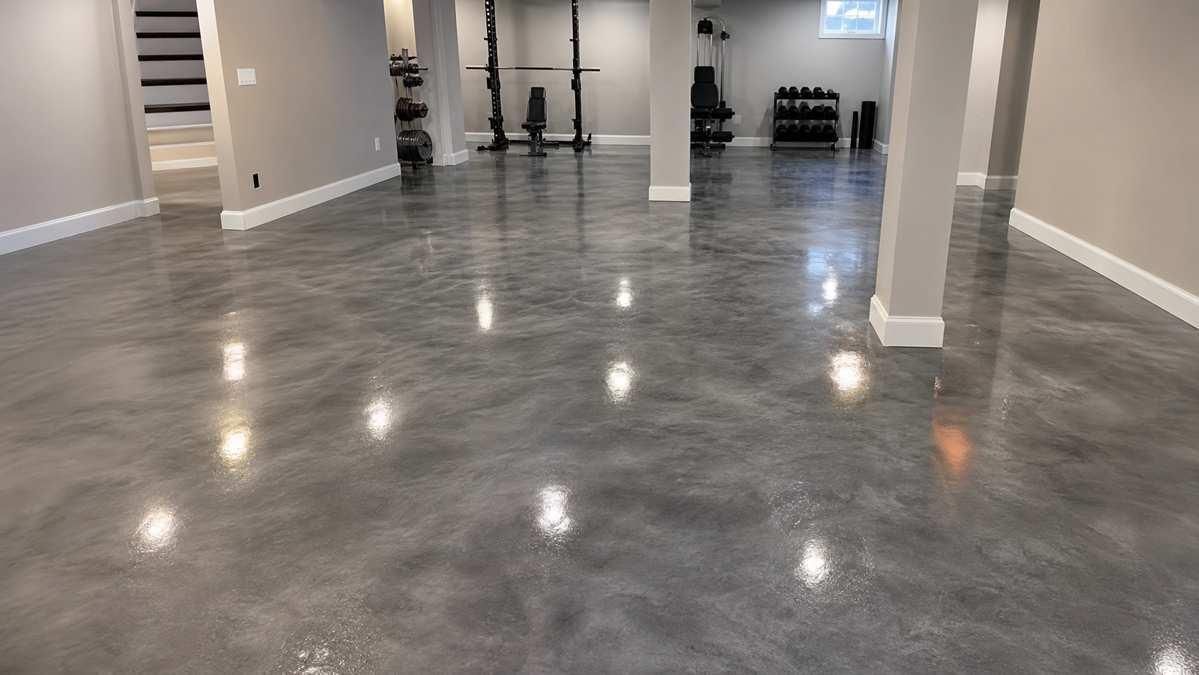
Coatings do not erase every limitation, but they change how the floor behaves day to day. The right system adds a protective wear layer and a finished surface over the existing concrete.
Epoxy flake is the most practical residential option for most homeowners: it hides minor imperfections, adds slip-resistant texture, and brightens a space without looking too formal. That combination is why it's the default on so many everyday garage floors, in Worcester and across the county alike, where a clean, usable finish matters more than a showroom look.
Polyurea changes the tradeoff for outdoor or high-traffic spaces. It cures quickly and resists ultraviolet exposure better than standard epoxy. If the surface sees patio sun, steps, or heavier wear, polyurea floors may fit better.
The deciding factor is preparation. LC Visions grinds, patches, levels, checks moisture, and installs vapor barriers when needed. Those steps protect the bond between slab and coating, which is where many failed floors start.
Frequently Asked Questions
Are polished concrete floors the same as coated concrete floors?
Polished concrete floors are not the same as coated concrete floors. Polishing mechanically refines the concrete surface itself. Coatings add a separate protective system over the slab. LC Visions does not offer polished concrete, but it does install epoxy flake, metallic epoxy, and polyurea coatings.
Which concrete floor finish works best for a damp basement?
A damp basement usually needs moisture testing before any finish is chosen. Metallic epoxy can work well in finished basements when the slab is prepared correctly. If vapor transmission is present, a moisture barrier may be needed before the coating system is installed.
Do coated concrete floors feel cold in Massachusetts homes?
Coated concrete floors can still feel cool because the slab underneath holds temperature. The coating improves cleanability and appearance, but it does not insulate like carpet. Area rugs, basement heating, and finished wall systems often affect comfort more than the coating alone.
Match the Floor Finish to the Room
Concrete floors are strong, cleanable, and flexible in design, but only with the finish the room actually calls for. A garage needs salt resistance and traction. A basement needs moisture planning first. A patio needs UV stability and grip. The slab is rarely the problem; the finish and the prep underneath it decide the outcome.
To talk through your concrete floor, contact LC Visions Epoxy & Coating at (724) 413-8946 .