
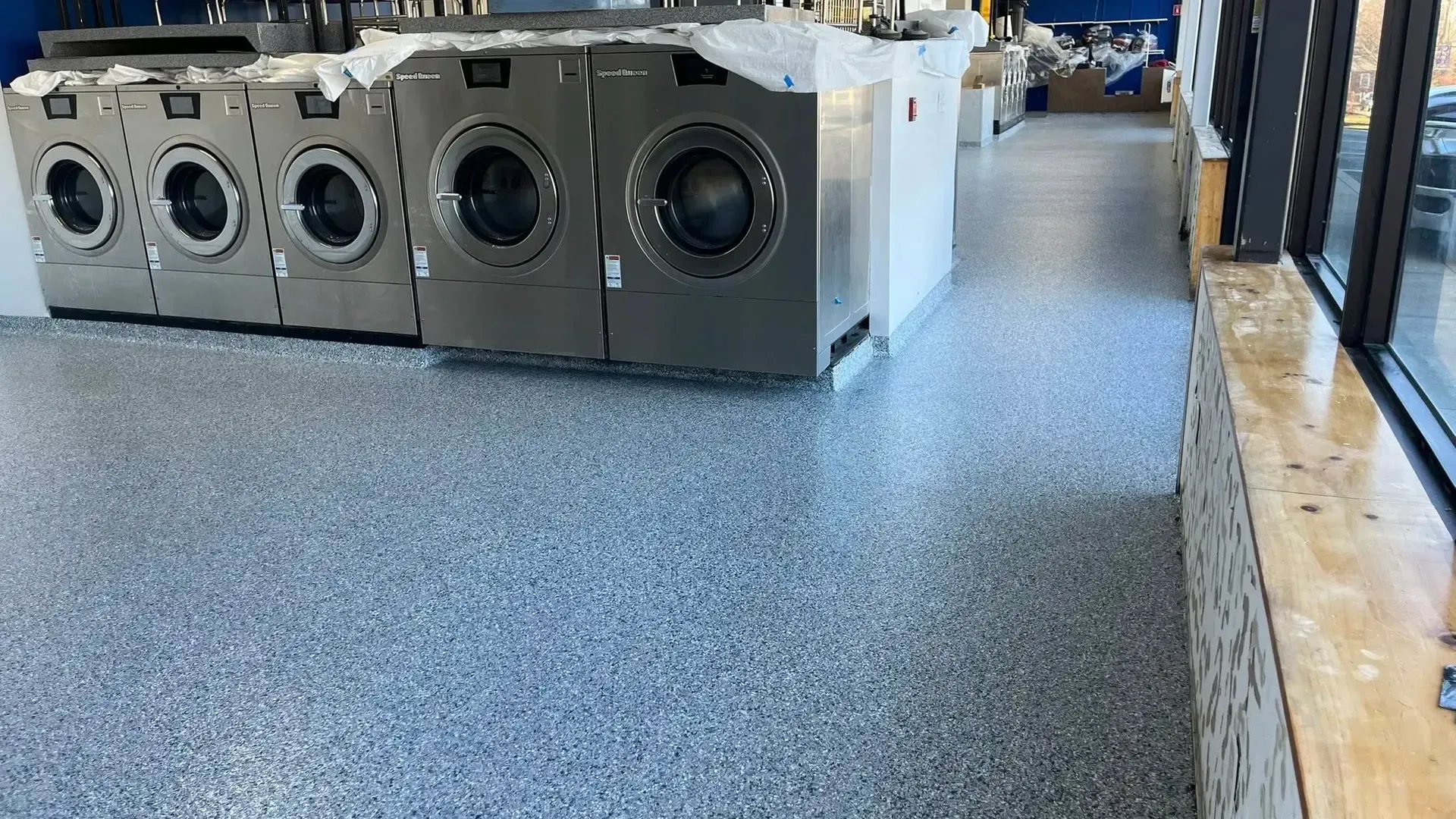
If you run a retail space, office, or other customer-facing property in Milford or elsewhere in Worcester County, the real planning question for a commercial epoxy flooring project isn't just "how long does the installation take" but "when can my business actually reopen as normal." Those two dates are often different. A floor can be safe to walk on well before it's ready for rolling carts, heavy equipment, or daily chemical exposure. Getting ahead of that gap, and deciding whether a full closure or a phased approach fits your space, is what keeps a flooring project from turning into unplanned downtime.
Why the Reopening Date Matters More Than the Finish Date
Epoxy, polyaspartic, and polyurea coatings cure in stages, not all at once. A surface can reach "foot traffic ready" long before it reaches "light traffic ready," and both milestones may come before full cure.
As one manufacturer example, published data for Sikafloor-264 at 68°F lists roughly 12 hours to foot traffic, two days to light traffic, and seven days to full cure. That's a single product at a single temperature, not a guarantee for every project, but it illustrates the point: a floor that looks finished the next morning may not be ready for your normal operations yet.
The gap can run the other direction too. A faster-curing coating example, Sikafloor-511, at 73°F lists approximately four hours to foot traffic, 12 hours to light traffic, and five days to full cure.
Quicker access to the room doesn't necessarily mean the coating has reached its full chemical and abrasion resistance. Before you set a reopening date, ask which milestone that date is actually based on, and get it from the specific system being installed rather than a general industry range.
These manufacturer examples illustrate the difference between curing milestones. They should not be interpreted as the exact products or return-to-service schedules used by LC Visions Epoxy & Coating.
Phased Work or a Full Shutdown: Matching the Plan to Your Space
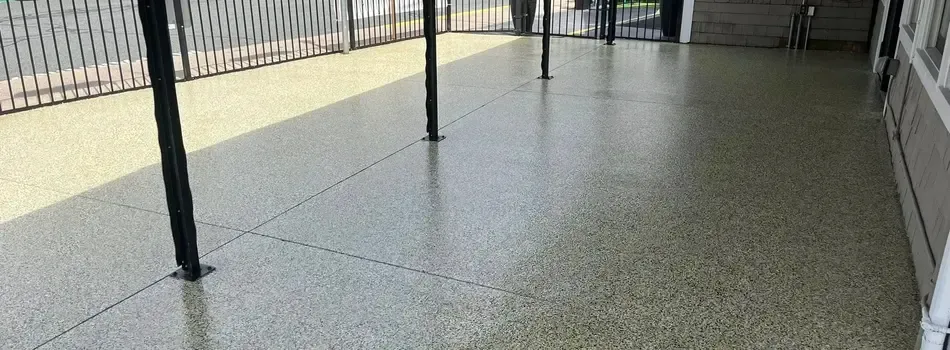
Not every commercial floor needs to close all at once. Splitting a space into sections can let part of a retail floor, office, or showroom stay open while another section is coated, but it only works if the layout supports it.
Phasing has to be sequenced around how customers, staff, and deliveries actually move through the building, and each work zone needs to be cleared before the crew arrives.
A phasing plan is something to evaluate against your specific layout, ventilation, safety requirements, and schedule, not an assumption that applies to every property.
- Can the areas staying open be reached without crossing an active work zone?
- Is there room to temporarily relocate furniture, shelving, or equipment out of the section being coated?
- Do deliveries, staff shifts, or customer hours need to be adjusted around the work zone?
- Can occupied areas be safely separated from preparation dust, coating work, and any required ventilation controls?
If those questions don't have workable answers for your space, a full closure window, planned around a confirmed reopening milestone, is usually the more realistic option.
What Affects the Schedule: System, Site Conditions, and Recoat Timing
LC Visions Epoxy & Coating offers commercial concrete coatings and epoxy flooring for retail floors, offices, showrooms, and other customer-facing spaces.
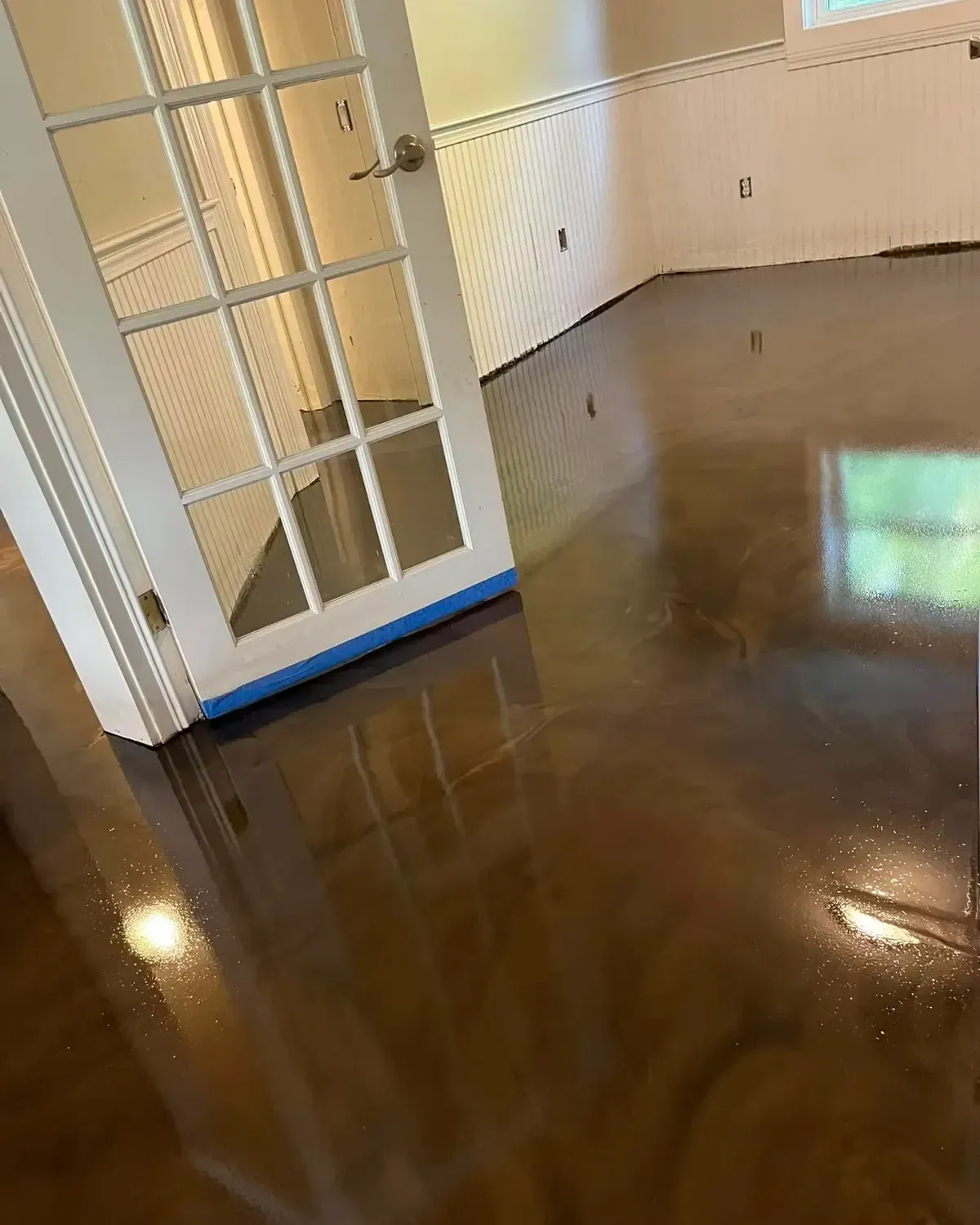
Its available coating options include broadcast flake systems, metallic epoxy, and fast-curing polyurea and polyaspartic coatings, along with moisture-vapor mitigation when site conditions require it.
Which option fits a given project depends on an assessment of the existing slab, including cracks, pitting, moisture, and uneven areas, since those conditions affect both preparation work and system selection.
Temperature matters just as much as the product itself.
Using the same Sikafloor-264 example, cure times stretch out considerably in cooler conditions: at 50°F, the manufacturer lists roughly 24 hours to foot traffic, three days to light traffic, and ten days to full cure, compared with 12 hours, two days, and seven days at 68°F.
For a Worcester County project during cooler months, that means the actual slab and ambient temperature on site, not a general seasonal assumption, should determine the closure window.
Multi-coat systems also have recoat intervals that affect how work gets sequenced.
The same Sikafloor-264 product example has an eight-hour minimum and 24-hour maximum waiting window between coats at 68°F. That timing helps illustrate why multiple coats cannot always be scheduled back-to-back or completed within a single short overnight shift.
Those intervals apply to the specific manufacturer product and conditions. The selected LC Visions coating system may have different recoat requirements.
If your schedule depends on fitting multiple coats into a short closure, confirm the manufacturer's required interval and any preparation needed if that window is exceeded before the work is booked.
What to Confirm Before You Lock In a Closure Window
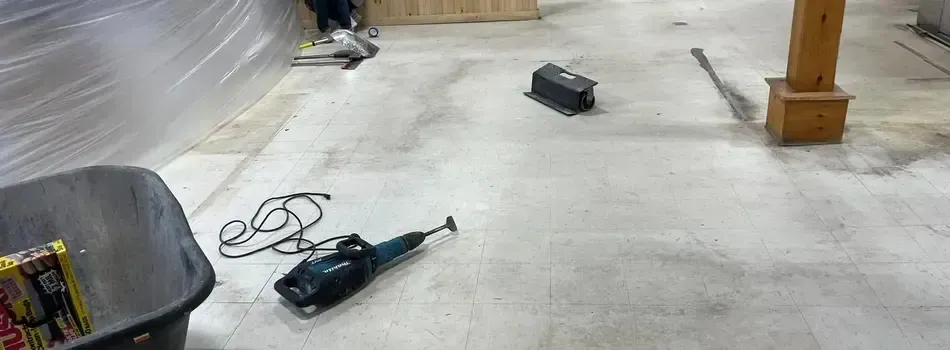
LC Visions Epoxy & Coating's published process for coating projects includes mechanical grinding, repairs, a moisture-vapor barrier when needed, base and finish coat layers, and a final walkthrough.
All of that needs to fit within your overall project schedule, not just the final coating step.
A few things are worth confirming in writing before committing to a date:
- Written return-to-service instructions that separate pedestrian access, rolling loads such as carts or pallet jacks, and chemical exposure, since staff, deliveries, and equipment moves may need different approval points.
- Which cure milestone your planned reopening date is actually tied to: foot traffic, light traffic, or full cure.
- Whether the facility's actual equipment loads and daily cleaning products are compatible with the proposed coating system and reopening schedule.
- How surface preparation, such as grinding, will be handled around any adjacent occupied space. Concrete grinding can generate fine silica dust, and OSHA's construction silica standard addresses exposure controls for concrete grinding, including specified wet methods or vacuum dust collection. It is reasonable to ask how dust will be controlled and occupied areas protected during preparation.
LC Visions Epoxy & Coating's posted business hours run Monday through Friday, 8 a.m. to 6 p.m.
Those are standard business hours rather than a guaranteed installation schedule, so any evening or weekend work should be discussed and confirmed directly instead of assumed.
For a closer look at how the preparation-to-finish sequence fits together, see the step-by-step installation process.
If turnaround speed is a major factor in your decision, the polyurea and polyaspartic coating options are also worth reviewing.
Ready to Map Out Your Closure Window?
If you manage a commercial property in Milford or elsewhere in Worcester County and need to plan a floor coating project around your business hours, call LC Visions Epoxy & Coating at (724) 413-8946.
We can walk through your space, your required reopening time, and which system and schedule realistically fit together before any work is booked.