
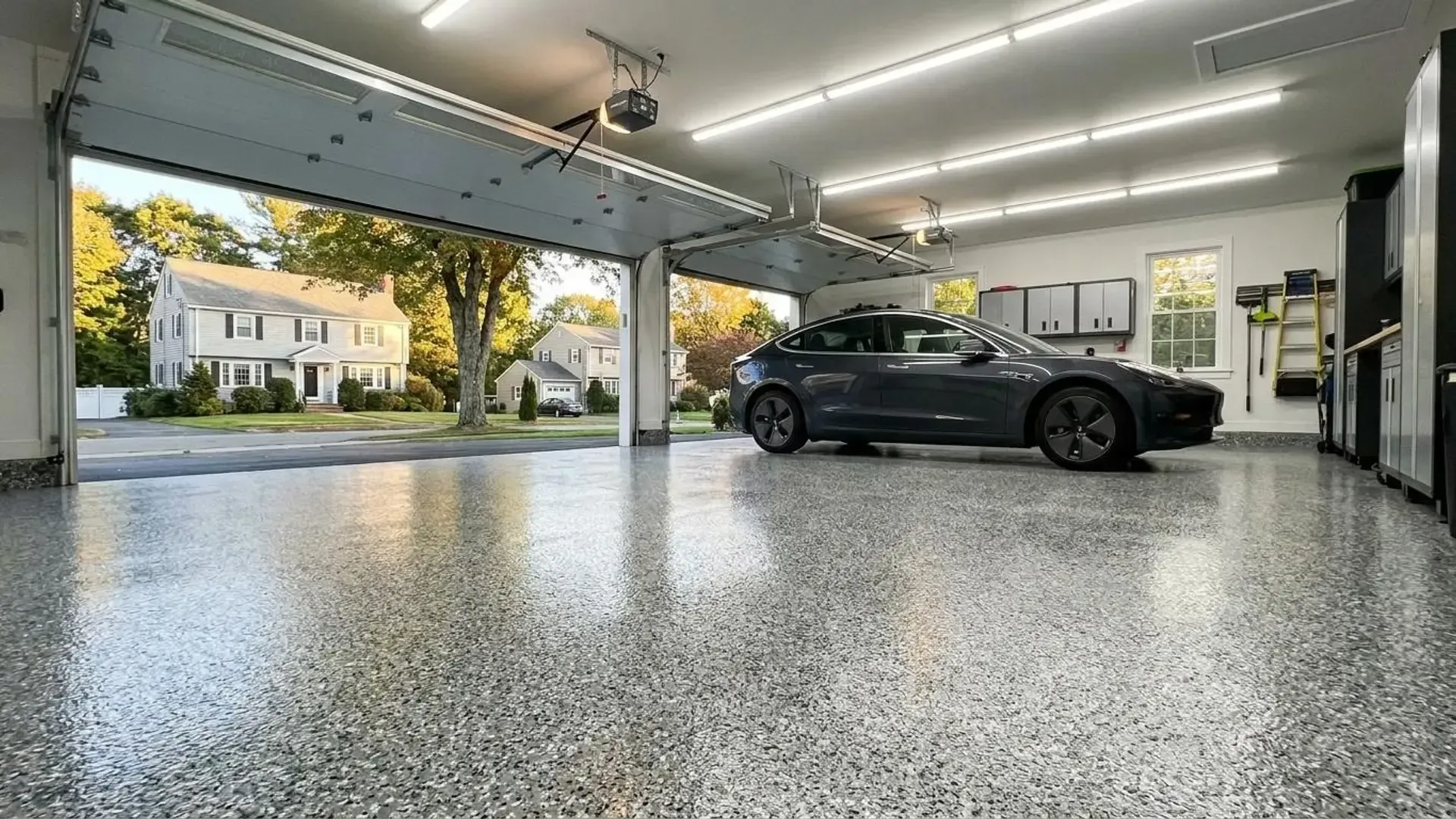
If you just had a new concrete slab poured and you're planning an epoxy floor for your home or business, the calendar date of the pour is only part of the story. Standard epoxy coating systems generally call for a minimum concrete curing period of about 28 days before application, but that number alone doesn't guarantee the slab is actually ready. Moisture levels inside the concrete, the temperature it cured in, and the specific coating system being used all play a role in when installation can safely begin.
Why 28 Days Isn't the Whole Answer
Concrete gains strength and loses moisture on two different timelines. A slab can look dry and feel solid on the surface while still holding moisture deeper inside, and moisture levels can vary from one spot on the floor to another. That distinction matters because judging readiness by appearance or surface hardness alone can be misleading ( Sherwin-Williams).
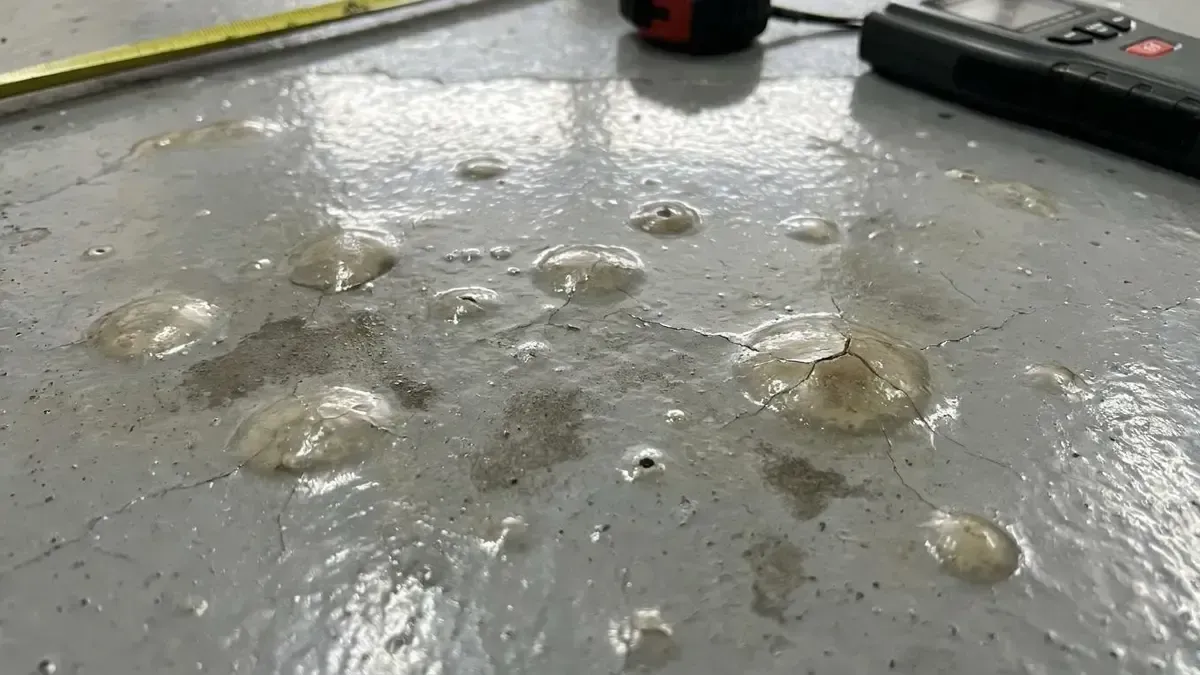
Coating a slab before it has adequately dried can trap moisture underneath an impermeable coating, which can contribute to bubbling, peeling, or other adhesion problems down the road. Waiting through the required curing period and confirming moisture conditions before coating helps protect the investment in the finished floor.
The standard 28-day recommendation is a useful starting point, but it isn't universal. Some specialized moisture-tolerant coating systems are approved for application to younger concrete under specific conditions. Other slabs may need substantially longer than 28 days before meeting the requirements of a standard epoxy system.
What Determines Whether a Slab Is Actually Ready
Instead of relying on time alone, readiness is usually confirmed through a combination of factors tied to the specific coating system being installed:
- Moisture testing method. Internal slab relative humidity and moisture vapor emission are measured differently, and the appropriate test depends on the product being used.
- The coating manufacturer's written acceptance criteria. There's no single moisture percentage that applies to every product, so acceptance should follow the specific system's requirements rather than a number borrowed from an unrelated coating.
- How the concrete was finished. Curing compounds applied by the concrete crew can affect how well a coating bonds, so it helps to know what was used on the surface before coating preparation begins.
Sika's surface preparation guidance outlines these distinctions in more depth.
Cold Weather Pours Change the Timeline
For a slab poured in Milford, MA or anywhere else across Worcester County, the weather during curing matters as much as the number of days on the calendar.
Concrete hydration slows significantly in temperatures below 40°F, and cooler conditions can call for a longer moist curing period before the slab reaches its required strength ( American Concrete Institute).
A slab poured during a cold snap may need additional curing time and protection compared with one poured in warmer conditions, even if both reach the same 28-day mark.
Cold weather can also affect how quickly excess moisture leaves the slab. For coating purposes, the concrete still needs to meet the selected manufacturer's requirements for substrate condition, moisture, and temperature rather than relying solely on its age.
Curing, Coating, and Full Cure Are Three Separate Clocks
It's worth keeping in mind that concrete readiness, the coating installation itself, and the coating's own return-to-service cure are three different stages, not one.
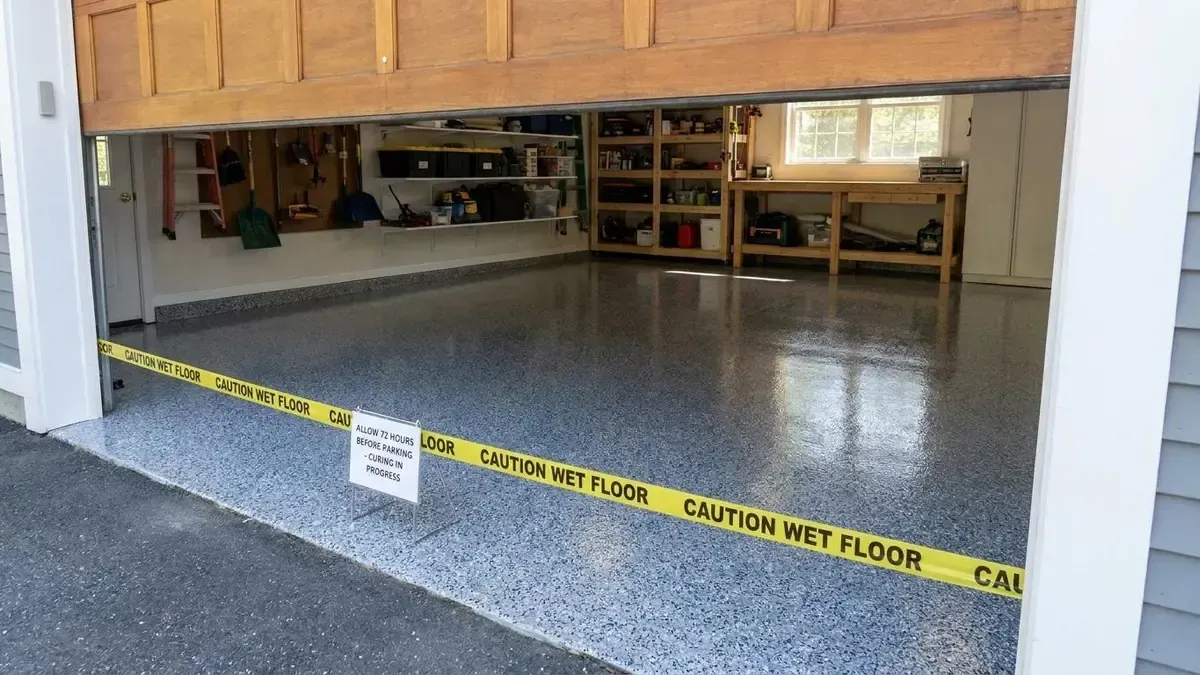
Coating product documentation typically distinguishes between when a floor can handle foot traffic, light traffic, and full use, with different wait times depending on temperature and the specific system.
In other words, the day the coating is applied isn't automatically the day the floor is ready to park a vehicle or load equipment on it.
If you're curious about what happens after installation day, our guide on how long an epoxy garage floor installation takes walks through that part of the timeline.
How LC Visions Prepares a New Slab
Every slab is inspected before any coating work begins. Depending on what that inspection turns up, preparation can include filling cracks, grinding down high spots, or using a self-leveling material to even out the surface.
Getting a new concrete slab ready for a floor coating isn't just about watching the clock. It's also about addressing whatever condition issues the concrete has developed.
LC Visions Epoxy & Coating evaluates the concrete's condition and preparation needs before recommending a coating system.
You can see more about this process on our residential concrete coating page.
Choosing a System Once the Slab Is Ready
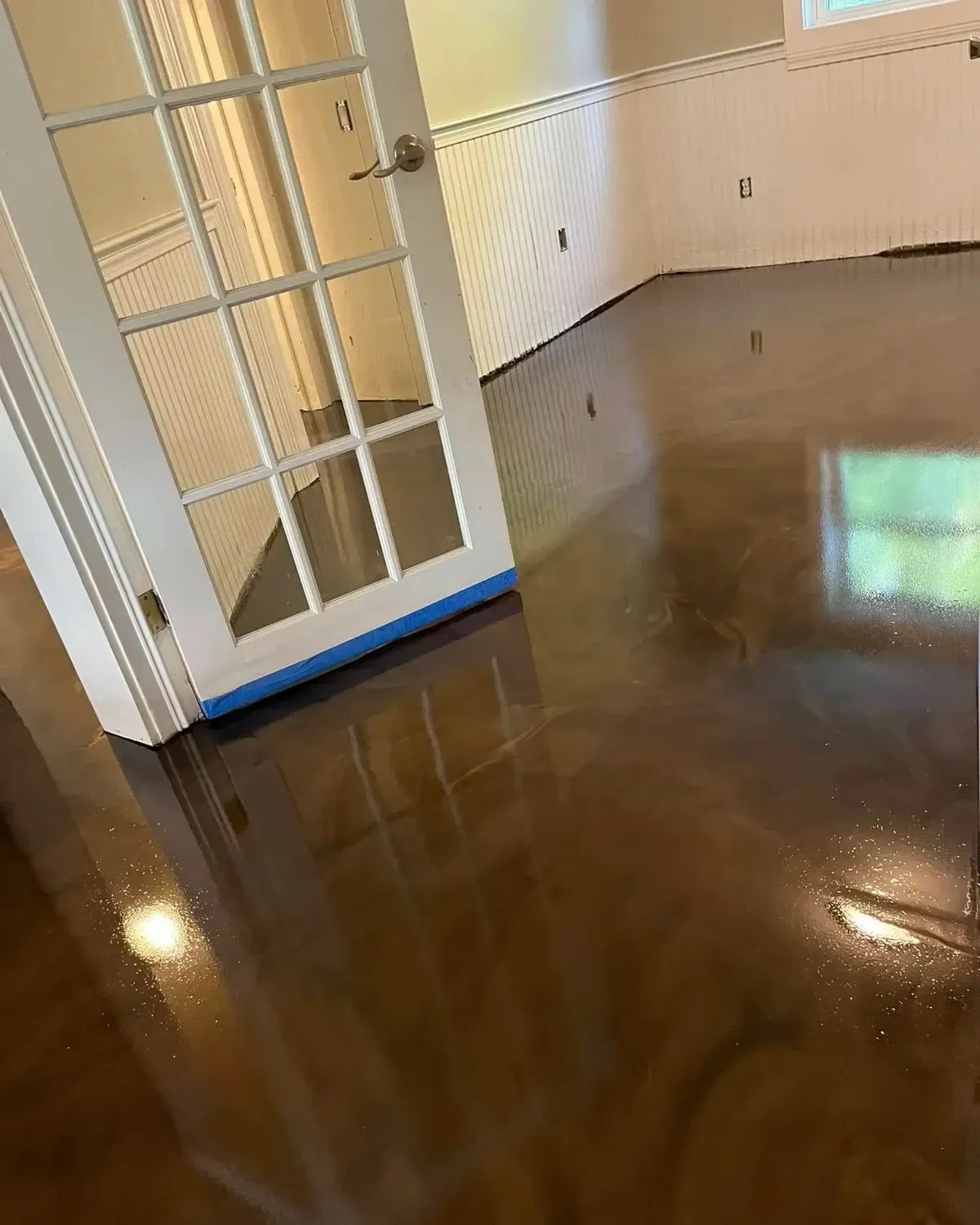
LC Visions offers a range of professional coating systems, including broadcast flake, metallic epoxy, polyaspartic, and polyurea coatings. The company also provides moisture-vapor mitigation when needed and offers fast-curing coating options for projects where minimizing downtime is important.
Having a fast installation option available isn't the same thing as being able to skip proper slab readiness.
Whatever system is ultimately chosen, the concrete itself still needs to meet that product's requirements before coating begins. A moisture-vapor barrier or moisture-tolerant system must also be selected and installed according to its manufacturer's specifications rather than treated as a universal solution for every damp slab.
This applies whether you're planning residential concrete coatings, commercial concrete coatings, epoxy flake flooring, or metallic epoxy flooring.
If you want to compare coating types in more detail, our breakdown of epoxy vs. polyurea vs. polyaspartic coatings can help.
Ready to Talk Through Your Project?
If you have a new slab curing in Milford, MA or elsewhere in Worcester County and you're planning ahead for an epoxy, flake, or metallic coating, LC Visions Epoxy & Coating can help you determine an appropriate timeline for your project.
Call (724) 413-8946 to talk through your pour date, concrete condition, and coating options.