
If you're finishing a basement in Milford or elsewhere in Worcester County, metallic epoxy and tile are two flooring options worth comparing, and they solve different problems. Metallic epoxy creates a continuous, reflective finish over properly prepared concrete, while tile is installed as individual pieces with grout lines between them. Neither one fixes a basement moisture problem on its own, so the right choice depends on your slab's condition, how you want the space to look, and how much ongoing upkeep you're willing to take on.
Two Different Ways to Finish a Basement Floor
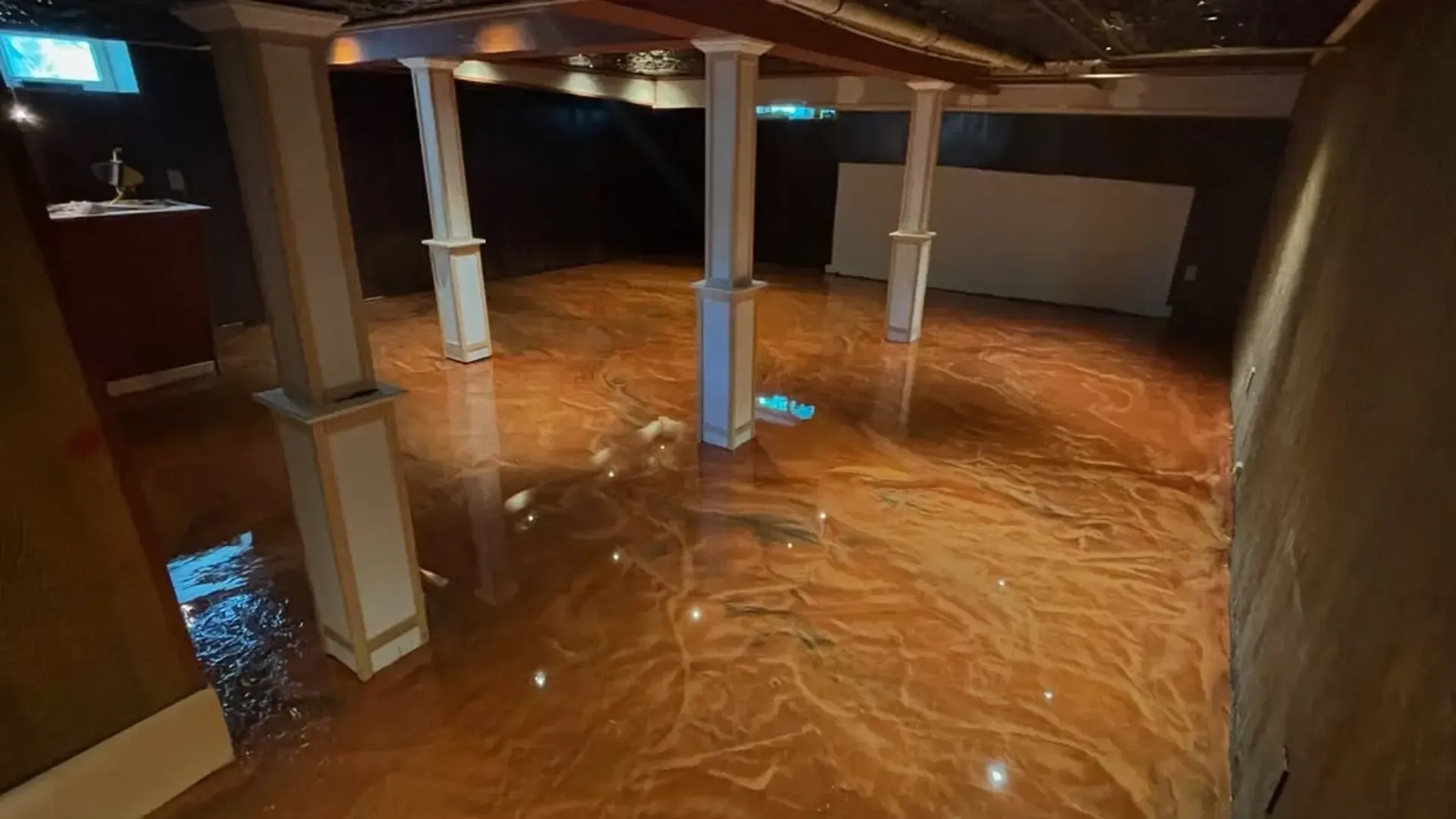
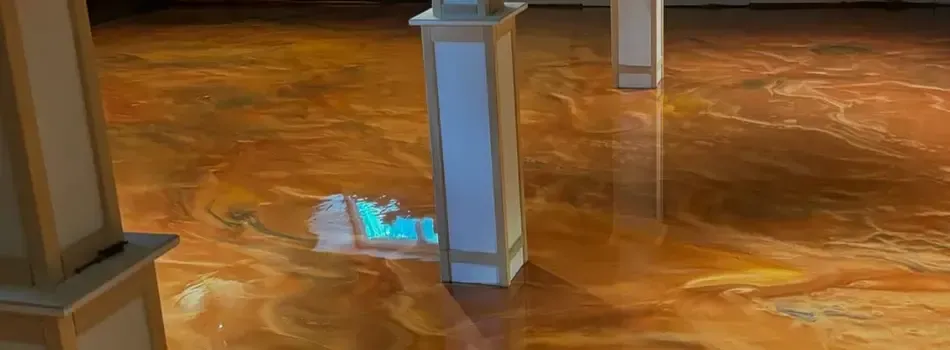
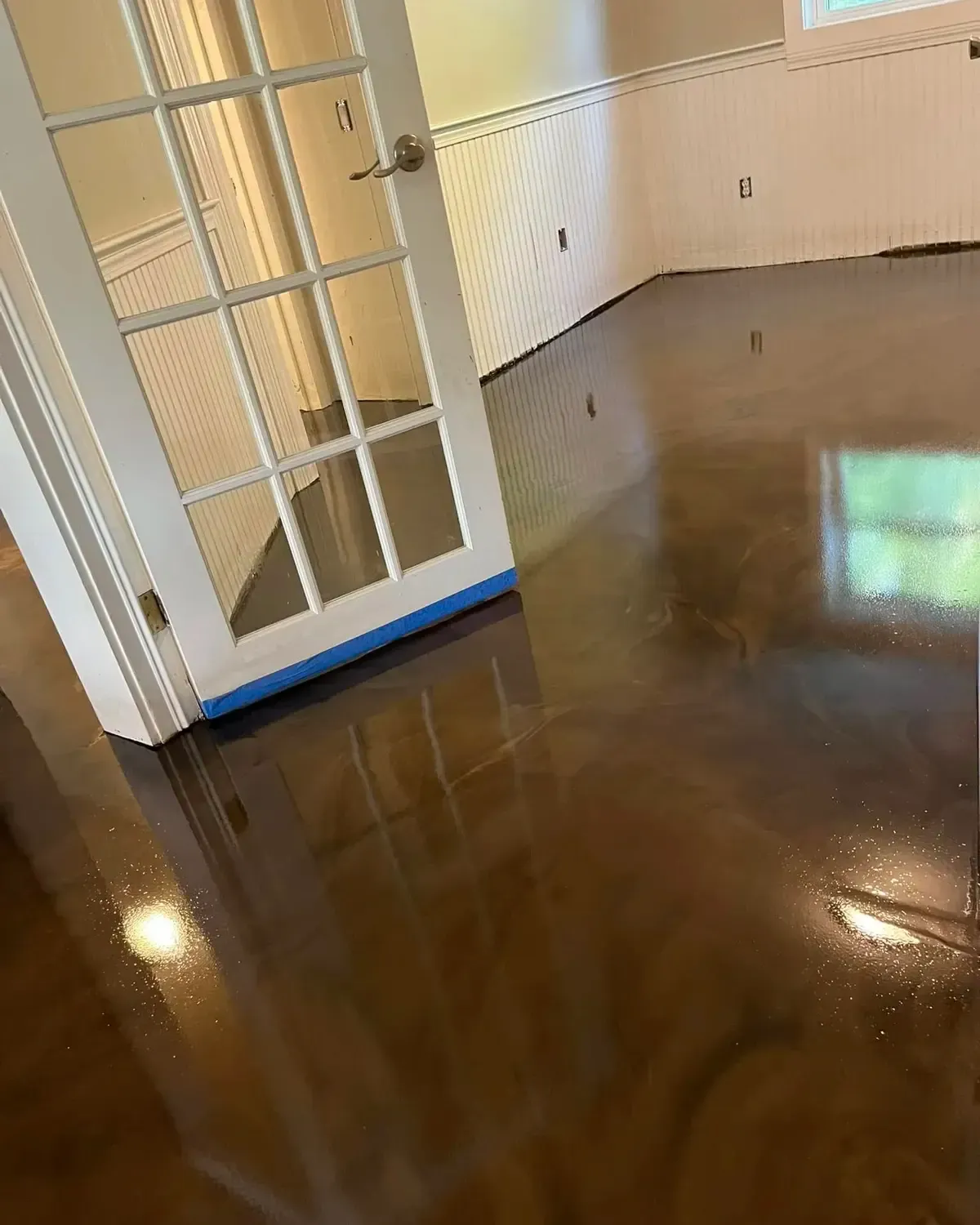
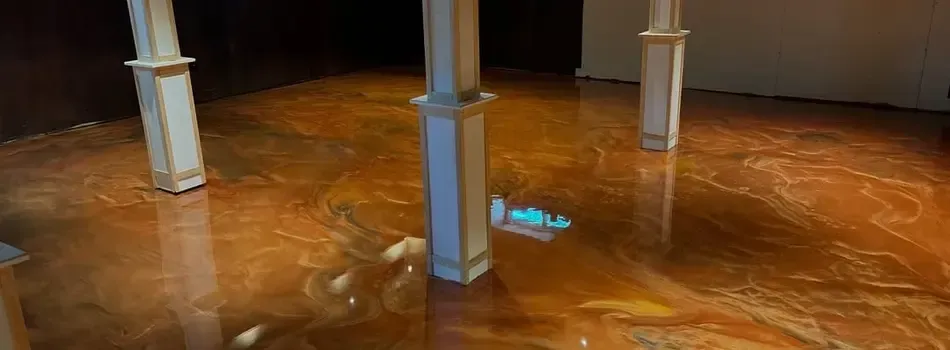
LC Visions Epoxy & Coating installs metallic epoxy flooring for finished basements, using reflective, marbled pigment effects with a choice of colors applied over prepared concrete. Because it's installed as a continuous coating system, there are no grout lines to collect dirt.
Tile, on the other hand, is set piece by piece, which means a damaged tile can often be removed and replaced individually, provided a suitable match is available. That's different from a continuous coated floor, where a localized repair may require blending or recoating to restore a consistent appearance. Keeping a few extra tiles from the original batch makes future color matching easier if that's the route you choose.
Tile upkeep also depends heavily on the grout that's specified. Some traditional cement-based grouts benefit from sealing to help resist staining, while certain modern cement-based and epoxy grouts do not require sealing. That's worth asking about directly if a tile installer is part of your comparison, since "tile maintenance" isn't a single answer.
Address the Moisture Before You Choose a Finish
Before comparing finishes, it's worth figuring out where any basement moisture is actually coming from. According to the University of Minnesota Extension, basement moisture can come from rain or groundwater around the foundation, from indoor sources like laundry or unvented appliances, or from humid outdoor air condensing on cool basement surfaces.
A water-resistant floor finish by itself generally won't resolve an underlying drainage issue, no matter which material sits on top. The source needs to be addressed first.
This matters for both flooring types. Moisture vapor moving through a slab is a different issue from standing water or hydrostatic pressure, and tile isn't automatically a solution for a basement with ongoing water intrusion.
Some properly designed tile installations can tolerate higher substrate moisture levels than certain epoxy systems, but the appropriate materials and installation method still depend on the conditions found.
For basements where moisture vapor is a concern, LC Visions includes moisture vapor barrier options as part of its coating preparation process. Those products must be matched to the slab's conditions and are not substitutes for correcting active groundwater or drainage problems.
What Goes Into a Properly Prepared Floor
Whatever finish you land on, the groundwork matters more than the final appearance. LC Visions' documented coating process for a project like this includes:
- An in-person assessment of the existing concrete.
- Mechanical grinding to prepare the surface for proper coating adhesion.
- Repair of cracks and spalling in the slab.
- Leveling of uneven areas as needed.
- A moisture vapor barrier when the slab's conditions call for one.
These steps describe LC Visions' epoxy coating preparation process, not a universal installation checklist for tile.
Tile installations also require suitable substrate preparation, but the specific approach to surface cleaning, flatness, crack treatment, moisture management, and bonding materials depends on the tile assembly selected.
Skipping necessary preparation can cause problems with either finish. The important thing is that the work matches the flooring system being installed.
Comparing Cost, Upkeep, and What Happens If It's Damaged
- Installed cost: LC Visions' published metallic epoxy pricing guide puts metallic epoxy at roughly $7 to $12 per square foot installed, depending on the condition of the concrete, the size of the room, and how complex the color design is. Treat that as general guidance rather than a quote, and confirm whether additional repairs or moisture mitigation are included before comparing it to another estimate. There isn't an equally documented local price point for basement tile to compare it against directly, so that's a question worth asking any tile installer you're considering.
- Repairs: Tile's main advantage here is that a single damaged piece can often be replaced without redoing the whole floor, provided a matching tile is available. A continuous coated floor doesn't offer that same piece-by-piece repair option, although localized coating repairs may be possible.
- Everyday upkeep: Tile upkeep depends on the grout, as noted above. A continuous epoxy system doesn't have grout lines to maintain, though normal floor cleaning still applies.
- Footing: Slip resistance comes down to the specific surface and how it's finished, along with conditions like water or dirt on the floor, rather than being a simple epoxy-versus-tile trait. If traction is a priority for your basement, ask what finish options are available for the system you're considering.
One more scheduling note on metallic epoxy specifically: it's applied in separate layers, and primers or base coats must reach the manufacturer's specified recoat stage before subsequent layers are applied. Temperature and humidity affect how long that takes, so "installation complete" and "ready to walk on or furnish" aren't necessarily the same milestone.
Ready to Talk Through Your Basement?
LC Visions Epoxy & Coating is based in Milford, MA, and serves homeowners throughout Worcester County, including Worcester, Uxbridge, Hopedale, and Mendon, as well as nearby communities such as Marlborough, Hopkinton, and Foxborough.
If you're weighing metallic epoxy for a finished basement, our team can take a look at your concrete, talk through moisture considerations, and put together options based on what your space actually needs.
Call us at (724) 413-8946 to get started.