
Are Metallic Epoxy Floors Slippery
Metallic epoxy floors aren’t inherently slippery when installed correctly. A professional installation includes anti-slip additives broadcast into the topcoat, which raises the floor's coefficient of friction to a safe, walkable level. LC Visions Epoxy & Coating installs metallic epoxy systems for Worcester County homeowners and addresses slip resistance as a standard part of every project.
Here's what most homeowners get wrong about metallic epoxy: they see the glossy finish in photos and assume it must behave like wet tile. That assumption leads people in Milford and Marlborough to skip a coating they'd actually love—because the concern is based on looks, not performance. The shine is a surface reflection. Slip resistance comes from chemistry and texture rather than how much light bounces off the floor.
Why Gloss Level Doesn't Determine Slip Resistance
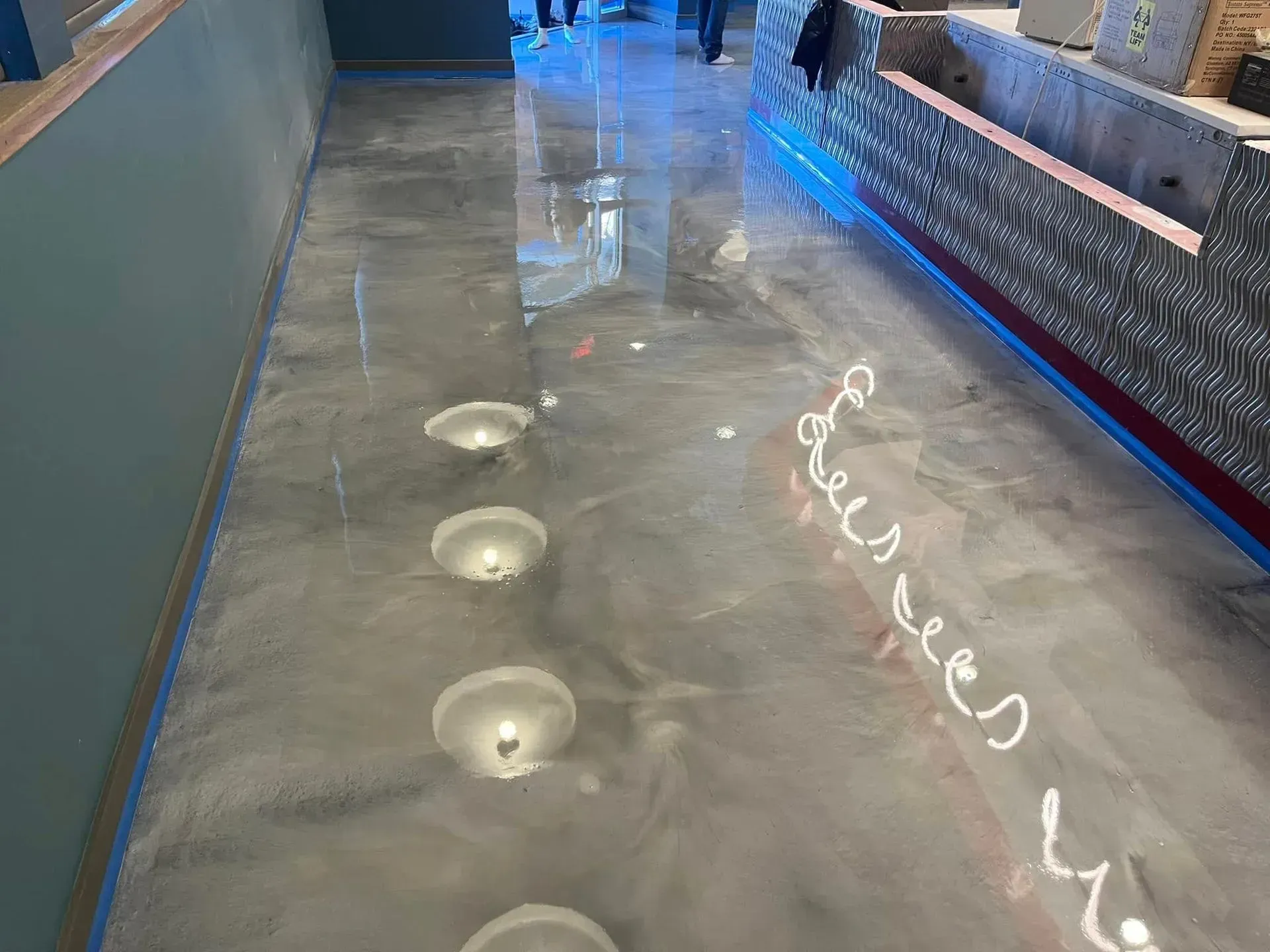
Slip resistance is measured by coefficient of friction (COF), the ratio of force needed to slide an object horizontally against vertical load. Industry-standard guidelines recommend a minimum 0.5 COF for safe pedestrian surfaces. A metallic epoxy floor with an aluminum oxide additive broadcast into the topcoat can meet that standard, while a matte concrete floor with accumulated surface dust can fall below it.
The sheen that makes metallic epoxy so visually striking comes from the resin's light-reflective properties and the metallic pigments suspended inside it. It has no bearing on how much friction the surface generates underfoot. Dull doesn't mean safe and shiny doesn't mean slick.
What Actually Controls the Grip
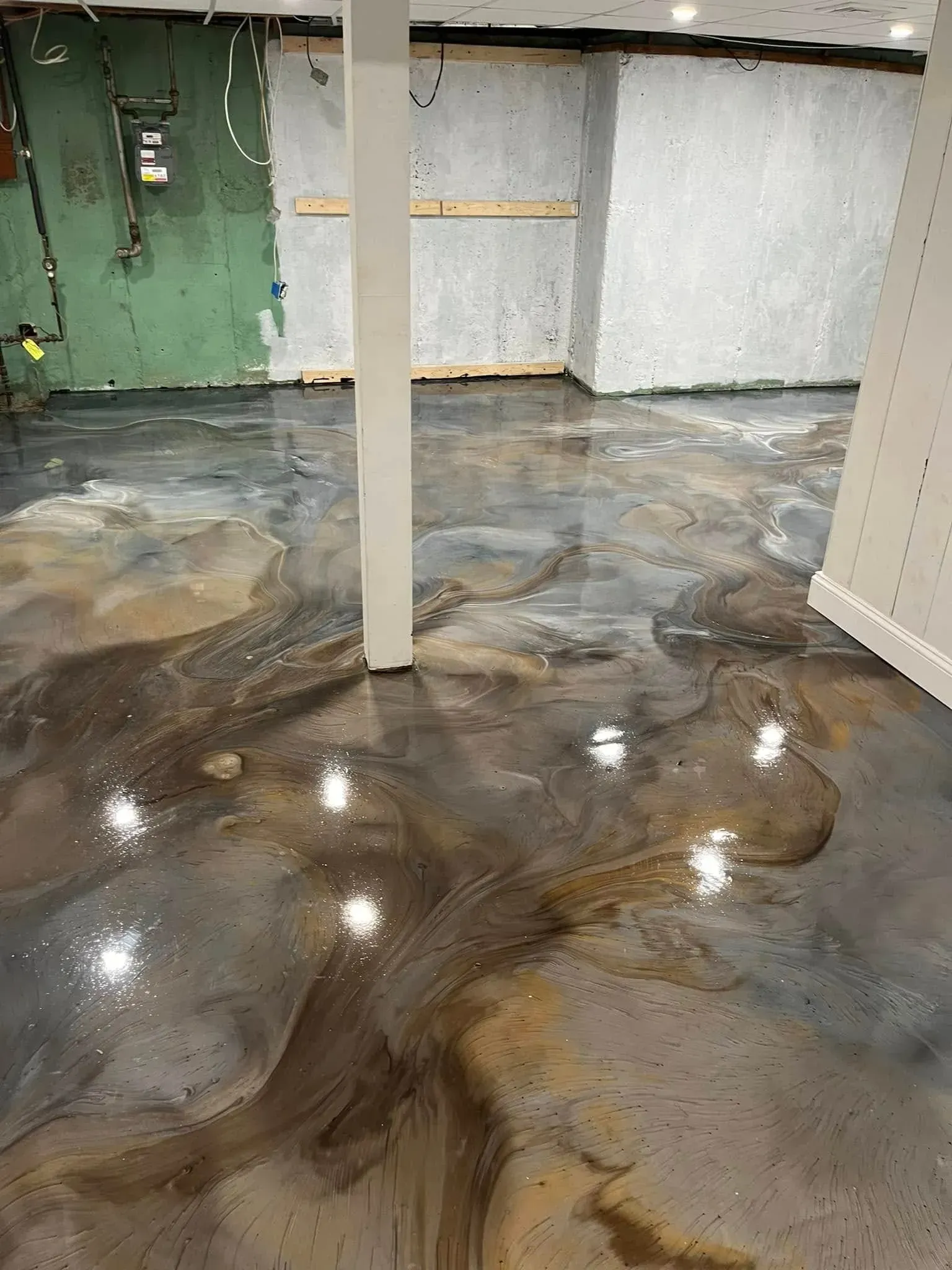
The finish coat is where grip is determined. In a standard metallic epoxy installation, the topcoat is typically a clear epoxy or polyaspartic (a UV-stable coating that resists yellowing). Before it cures, anti-slip aggregate (aluminum oxide or silicon carbide) is broadcast across the surface. The particles are embedded as the coating hardens, creating microscopic texture that friction tests can measure.
The broadcast quantity matters. A light broadcast gives moderate traction with a smooth feel, good for finished basements and home gyms. A heavier broadcast is better for garage floors where wet boots are common. This is a decision LC Visions makes with every homeowner before work begins, because the texture level affects both safety and the finished look.
Where Slip Risk Is Real
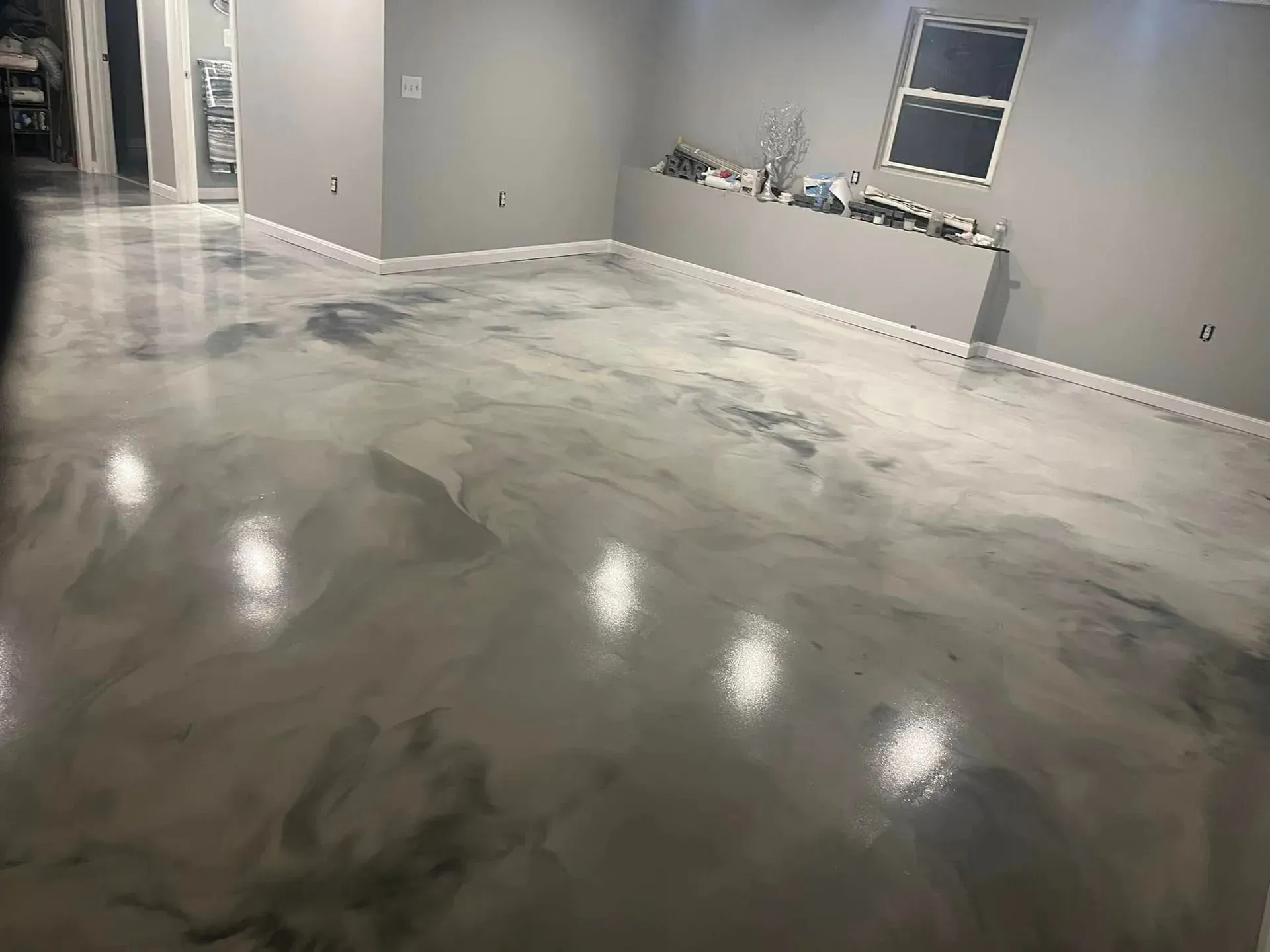
The condition that actually tests any hard-surface floor is water. A puddle on concrete, tile, or epoxy temporarily drops friction. That isn’t specific to metallic epoxy; it's true of every hard flooring material. Understanding what causes epoxy floor problems helps separate real risks from cosmetic concerns.
In Worcester County, the most relevant scenario is a New England winter. Homeowners tracking in snow, road salt, and slush bring that moisture directly onto the garage or entryway floor. An anti-slip additive is what separates a floor that handles it from one that doesn't. See also: what affects the lifespan of epoxy floors.
Getting the Spec Right
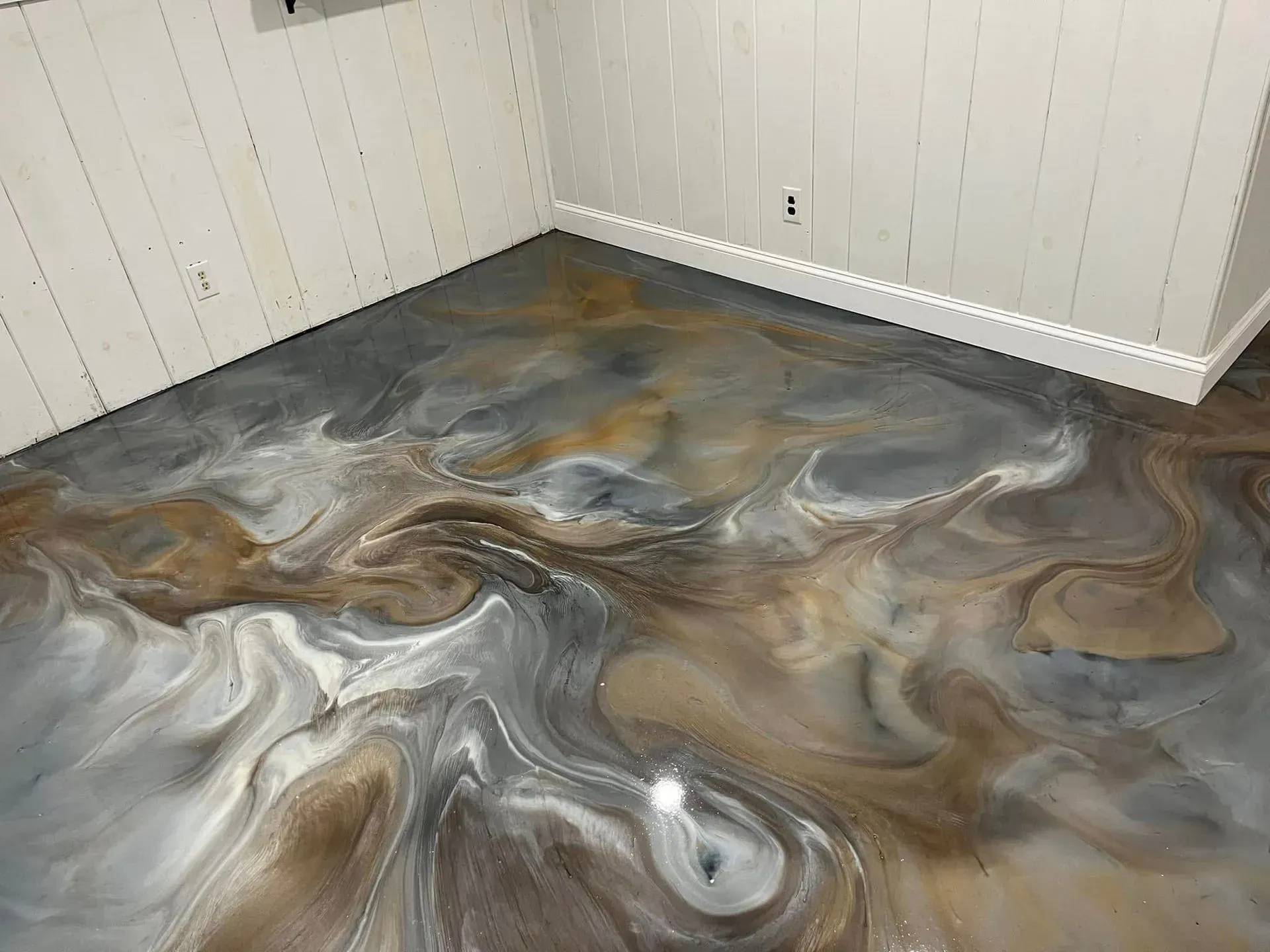
Slip resistance isn’t an optional add-on, but part of the initial installation. Homeowners across Worcester, MA and surrounding communities ask about this regularly, and the answer is the same: gloss is a visual characteristic of the metallic pigments and doesn’t affect traction.
A properly installed metallic epoxy floor is safe for garages, basements, and utility spaces that see foot traffic year-round. The key is matching the texture profile to the space before work starts.
Frequently Asked Questions
Can metallic epoxy be installed in a garage that gets wet in winter?
Yes. Metallic epoxy can be installed in garages that see wet conditions, including the snow, slush, and road salt common in Worcester County winters. The installation should include an anti-slip additive in the topcoat to maintain safe footing when the floor gets wet. A heavier aggregate broadcast is typically recommended for garage applications versus finished basement floors.
Does adding anti-slip texture change how metallic epoxy looks?
A light anti-slip broadcast has minimal visual impact. The floor still looks glossy and reflective. A heavier broadcast creates a more noticeable surface texture that slightly reduces the mirror-like finish. LC Visions Epoxy & Coating discusses this tradeoff with every homeowner before installation so the texture level matches both safety requirements and the aesthetic the homeowner wants.
Is metallic epoxy safe for basement floors where kids and pets use the space?
Metallic epoxy is a safe choice for finished basement floors used by families. With a properly broadcast anti-slip topcoat, the coefficient of friction meets safe pedestrian standards for dry and moderately wet conditions. The seamless surface also eliminates grout lines where debris collects, making it easier to keep clean.
Make the Right Call Before Installation
Slip resistance comes down to how the topcoat is specified. Get the texture profile right and the floor is safe, durable, and exactly as good-looking as it appears in the photos. Underspecify it, and you've traded safety for shine.
LC Visions installs metallic epoxy systems for Worcester County homeowners who want both.
Contact us to get a free quote and we'll walk you through the right texture spec for your space before any work begins.